

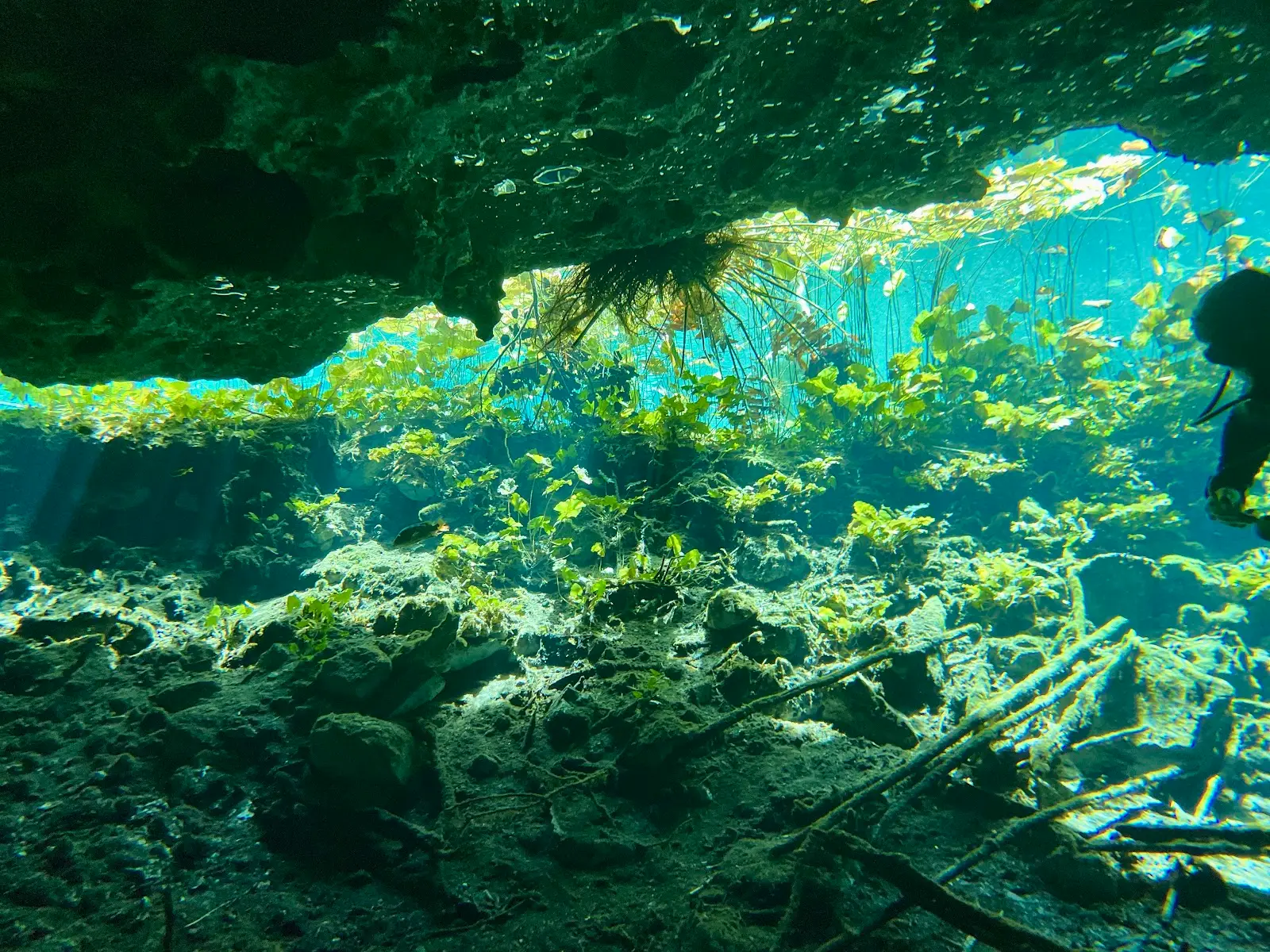
Ask ten divers to name the most beautiful place they have ever been underwater, and if any of them have dived the Riviera Maya, you already know the answer: a cenote. These freshwater windows into the Yucatán’s flooded cave systems — sacred entrances to the underworld for the ancient Maya — hold the clearest water most divers will ever see, pierced by light beams and decorated with formations tens of thousands of years old.
There are thousands of cenotes on the peninsula, and hundreds you can dive. As a cenote diving shop based in Playa del Carmen, we get asked one question constantly: which ones are actually worth it? Here is our honest local list — the most beautiful cenotes near Playa del Carmen for divers, from first-timer friendly to advanced-only, with what you need to know before you jump in.
Every route we dive, with levels and prices, is on our cenote diving in Playa del Carmen page.
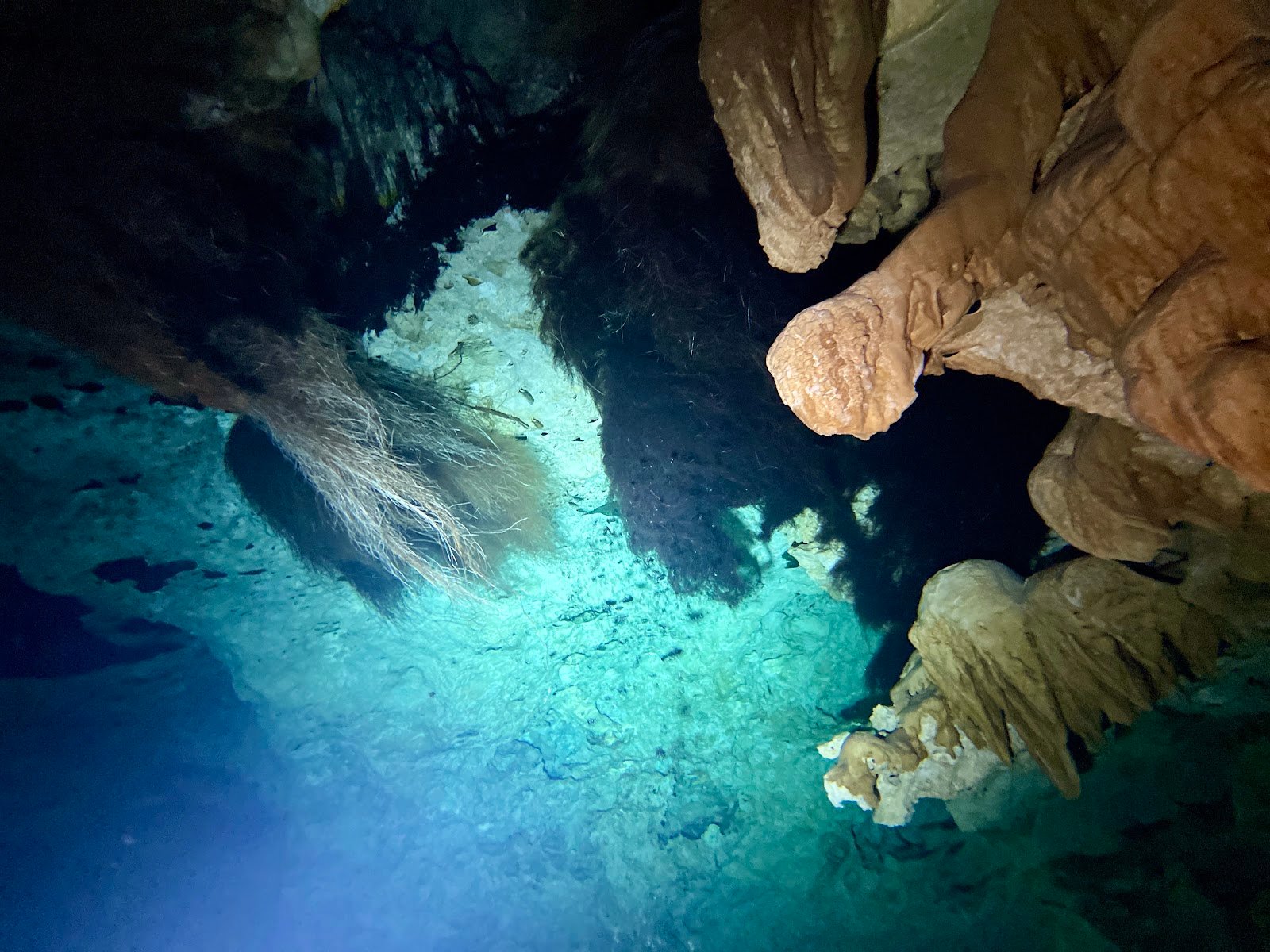
How We Chose This List
Every cenote here is one we guide regularly. We weighed beauty first — light, water clarity, rock architecture — then accessibility, crowds, and how each site suits different certification levels. All cavern dives run with a maximum of 4 divers per guide, along permanent guidelines, within the daylight zone. New to all this? Read what to expect on your first cenote dive first.
1. Cenote Chac Mool — The Perfect First Cenote
Best for: First-time cenote divers · Level: Open Water · Typical guided depth: ~12 m · Drive from Playa: ~20 min
Chac Mool is where we take most divers for their first taste of the underworld, and it never disappoints. Two entrances open into wide, forgiving caverns where afternoon sun creates curtains of blue light; on the classic route you pass beneath an air dome where you can surface inside the cave and exchange wide-eyed looks with your buddy. A strong halocline adds the surreal, shimmering finale.
2. Cenote Kukulkan — The Light Show
Best for: Sunbeam photography · Level: Open Water · Typical guided depth: ~12 m · Drive from Playa: ~20 min
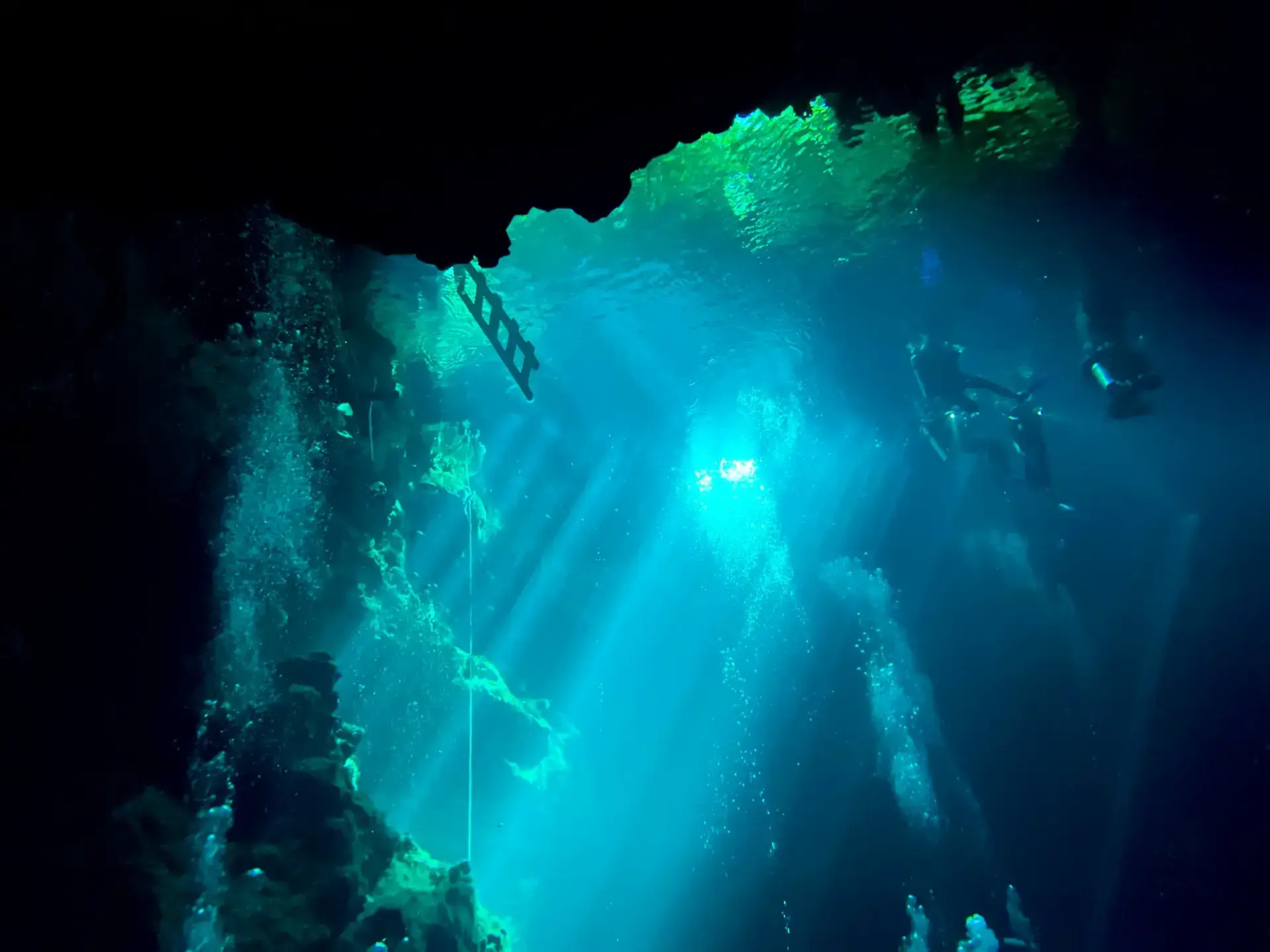
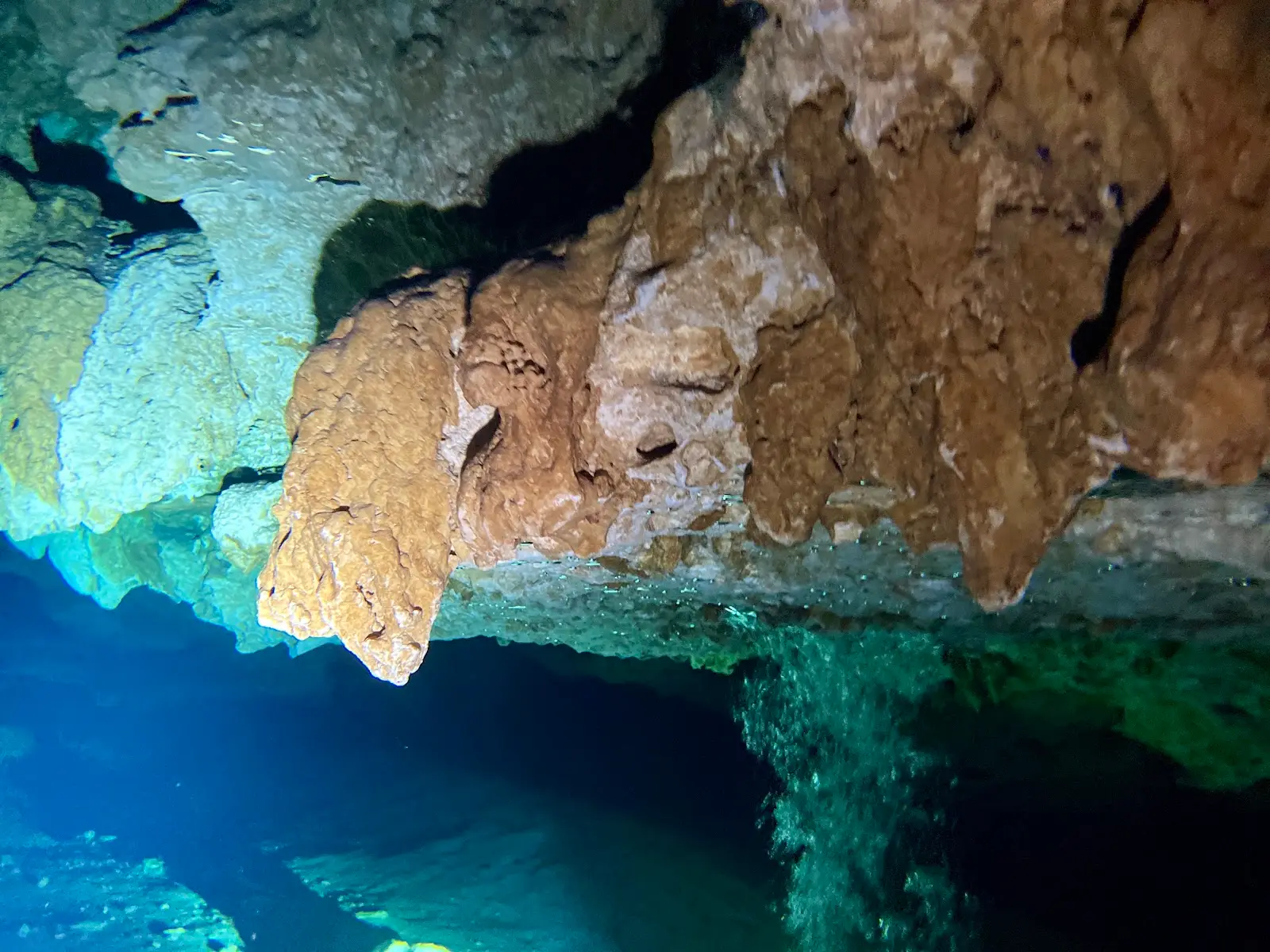
Sharing the same park as Chac Mool, Kukulkan is famous for one thing above all: light. On a sunny late morning, the entrance pool projects a wall of parallel beams through the blue that divers describe as standing inside a cathedral window. It is an easy, calm dive that photographers deliberately schedule around the sun.
3. Ponderosa (El Edén) — The Garden
Best for: Relaxed second dives and snorkelers in tow · Level: Open Water · Typical guided depth: ~12–14 m · Drive from Playa: ~25 min
El Edén earns its name: a huge open pool ringed by jungle, with sunlit shallows full of freshwater fish and turtles, then a sweeping cavern line along the rock wall. The halocline here is one of the best in the Riviera Maya — a rippling, oily curtain where fresh and salt water meet. It is also a lovely place to linger after the dive with non-diving companions.
4. Cenote Tajma Ha — The Photographer’s Favorite
Best for: Light beams, formations and haloclines in one dive · Level: Open Water (good buoyancy) · Typical guided depth: ~13 m · Drive from Playa: ~30 min
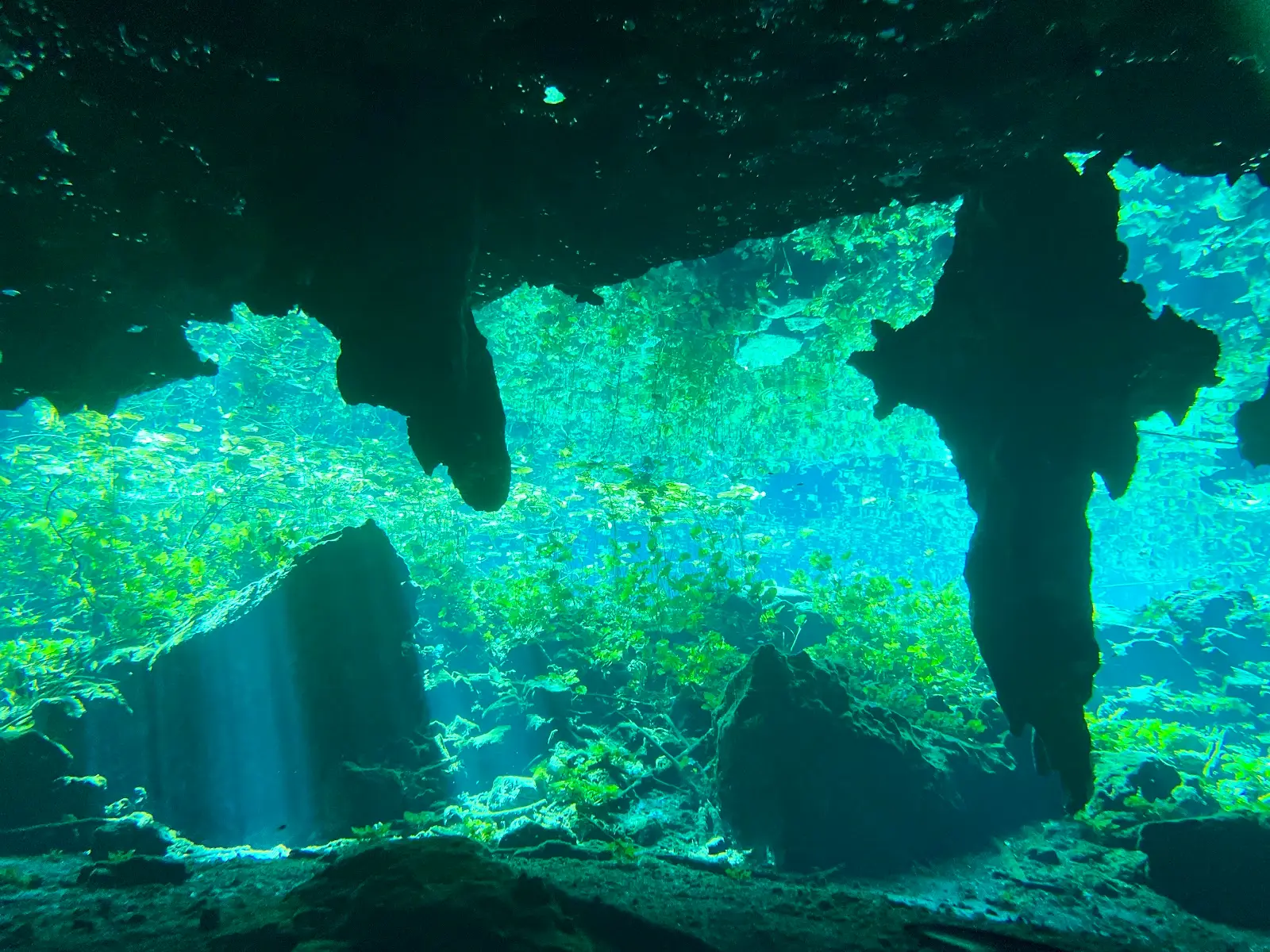
Tajma Ha (yes — a play on the Taj Mahal) packs the full cenote experience into a single line: decorated rooms, deep blue passages, multiple haloclines, and the famous Sugar Bowl chamber where winter sun angles send spotlight beams into the darkness. Slightly more involved than the beginner sites, it rewards divers with steady trim.
5. Dos Ojos — The Icon
Best for: Famous routes and sculpted passages · Level: Open Water · Typical guided depth: ~8–10 m · Drive from Playa: ~45 min
The “Two Eyes” — twin sinkholes joined by a vast shallow cavern — may be the most famous cenote dive on Earth, and it earns the reputation. The Barbie Line route winds through sculpted, sunlit passages; the Bat Cave route visits a hidden air dome where bats wheel overhead. Shallow depths mean long, relaxed dives with time to look at everything.
6. Casa Cenote — Where the Jungle Meets the Sea
Best for: Nervous divers, naturalists, long easy dives · Level: Open Water · Typical guided depth: ~6–8 m · Drive from Playa: ~45 min
Different from everything else on this list: an open mangrove channel with no overhead at all, winding like a river through the jungle before connecting underground to the ocean. Expect tarpon, juvenile fish among the mangrove roots, and beautiful dappled light. If the idea of a cavern still makes you hesitate, Casa Cenote is your gateway drug.
7. El Pit — The Deep Cathedral
Best for: Advanced divers chasing the famous beams · Level: Advanced Open Water · Typical guided depth: ~30 m · Drive from Playa: ~45 min
A single vertical shaft dropping past 100 meters (we turn much shallower), El Pit is the most dramatic dive in the region. Morning light plunges in colossal beams to a hazy hydrogen-sulfide layer around 30 meters, where tree branches poke through the mist like a drowned forest. Divers regularly rank it among the best dives of their lives. Advanced certification required — our Advanced Open Water course gets you there in three days.
8. Cenote Angelita — The Underwater River
Best for: The strangest dive you will ever do · Level: Advanced Open Water · Typical guided depth: ~30 m · Drive from Playa: ~60 min
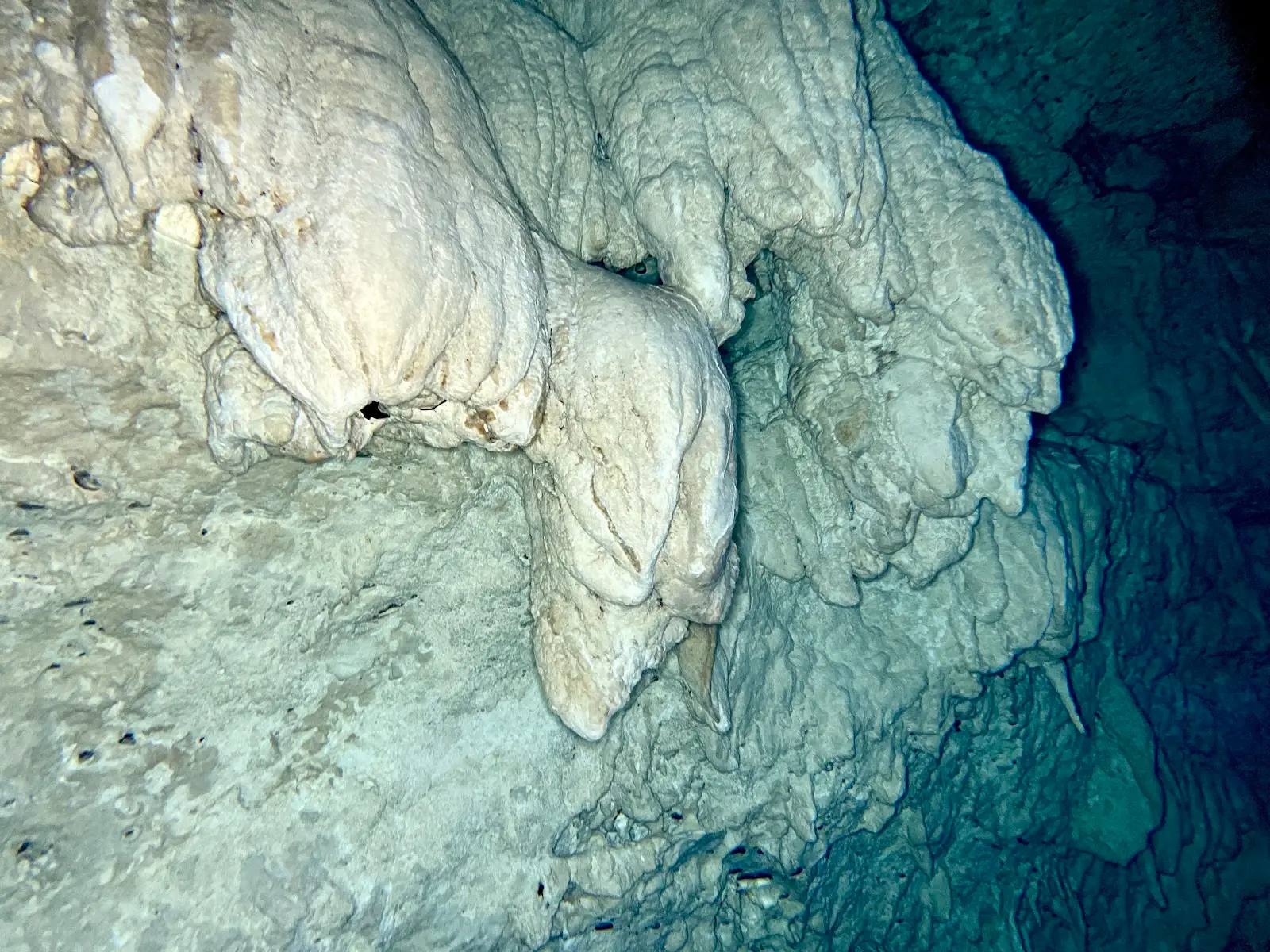
Angelita is pure surrealism: a deep, open shaft where a dense hydrogen-sulfide cloud sits at around 30 meters, flowing around a small island of fallen trees so convincingly that it photographs as a river with banks and mist. Descending through the cloud into the dark water below is an otherworldly minute you will describe badly to everyone you know. Advanced divers only.
9. Cenote Zapote — Hells Bells
Best for: Rare geology found almost nowhere else · Level: Advanced Open Water · Typical guided depth: ~28–35 m · Drive from Playa: ~50 min
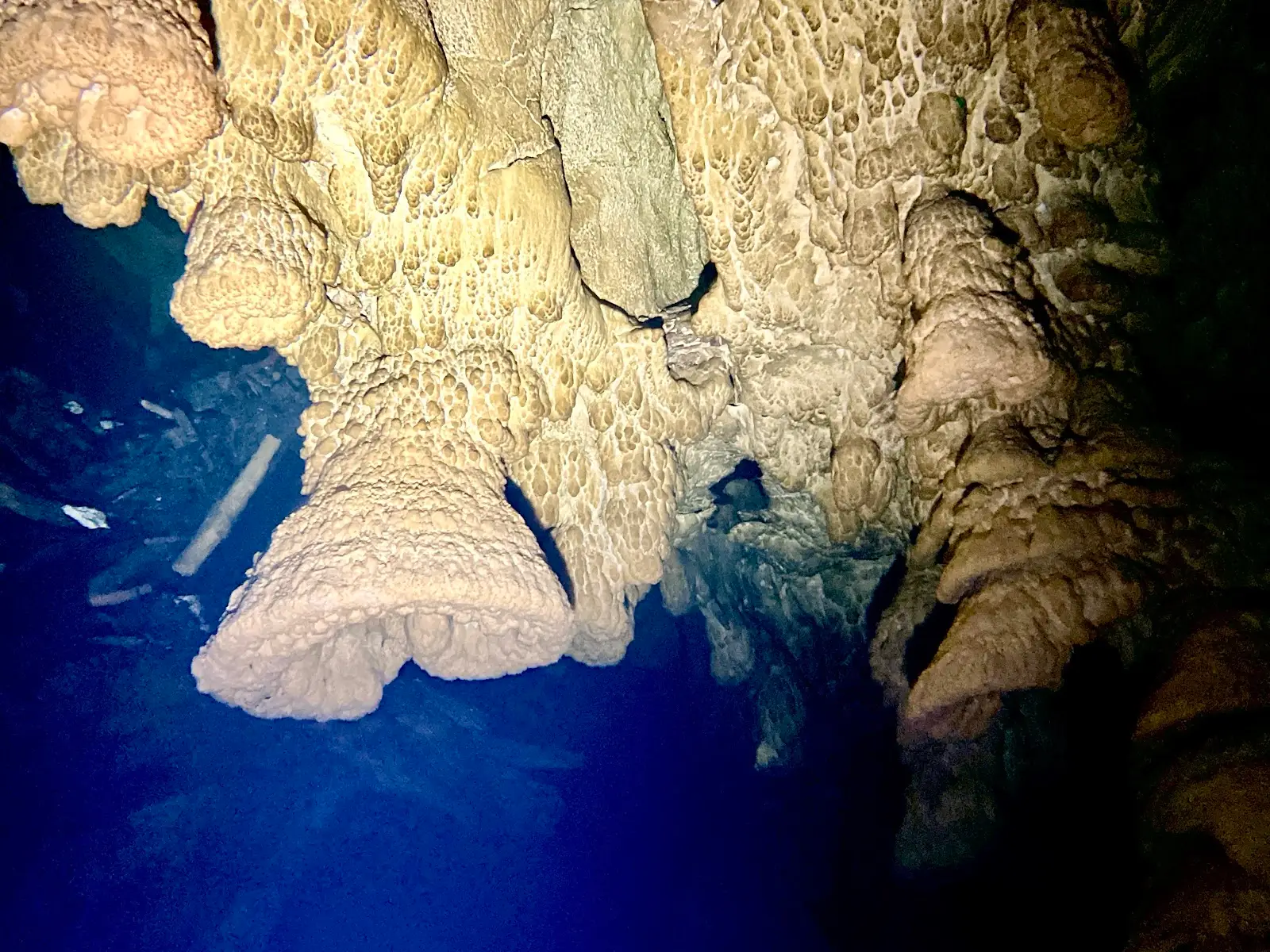
On the Ruta de los Cenotes near Puerto Morelos, Zapote hides the strangest formations in the Yucatán: the Hells Bells — hollow, bell-shaped structures up to two meters long that grow downward from the walls and hang over the void. Scientists are still working out exactly how they form. Add a wispy sulfide layer below and you have a dive that feels like visiting another planet.
10. Cenote Maravilla — The Local Secret
Best for: Divers who want a cenote to themselves · Level: Open Water and up (route depends on experience) · Typical guided depth: varies by route · Drive from Playa: ask us
We will keep some mystery here on purpose. Maravilla — “marvel” — is a cenote we love precisely because almost nobody dives it: dramatic rock architecture, moody light, and none of the queues you can meet at the famous names. It is the kind of site that reminds you the Yucatán still has secrets. Ask us about it when you book and watch our film above from inside — or better, come see it.
More Gems Worth Asking About
The list could go on for pages: Chikin Ha (a beautiful multi-cenote circuit), Nicte Ha (shallow flower-garden light, a macro photographer’s dream), Dreamgate (the most delicately decorated cavern in the region — flawless buoyancy required), Taak Bi Ha (a hidden jewel box near Dos Ojos), and Carwash (famous seasonal algae bloom that turns the entry golden-red). Tell us what excites you and we will build the right circuit — that is the advantage of diving with a local cenote specialist.
Practical Tips for Cenote Diving
- Book cenotes as a two-dive morning. Trips include transport, tanks, weights and equipment (3,000–3,800 MXN depending on the cenote), with hotel pickup in Playacar and downtown Playa del Carmen.
- Skip sunscreen and bug spray before diving — even biodegradable formulas damage the fragile freshwater ecosystem.
- Dial in your buoyancy first. If you have not dived in a while, do a reef warm-up day before the delicate sites.
- Go on a sunny day if you can — beams are best between roughly 11am and 2pm — but remember cenotes are spectacular (and subject to suitable conditions and site access) year-round. See our month-by-month diving guide.
- Bring your certification card and be honest about experience — depth-rated sites like El Pit, Angelita and Zapote genuinely require Advanced certification.
Comparing operators before you book? Our guide to choosing the best cenote tour in Playa del Carmen covers the guide, the group size, the route for your level and the questions to ask.
Frequently Asked Questions
Which cenote is best for first-time cenote divers?
Chac Mool and Kukulkan are our usual first picks — wide caverns, easy profiles, unforgettable light. Casa Cenote is the gentlest option of all, with no overhead environment.
Do I need a special certification to dive cenotes?
For guided cavern routes, a standard Open Water certification is enough. Deep cenotes (El Pit, Angelita, Zapote) require Advanced Open Water. Full cave diving is a separate technical path — here is how divers become cave certified in Mexico.
Can non-divers come along?
At several sites, yes — Ponderosa and Casa Cenote are great for snorkeling companions. Tell us your group setup and we will pick sites that work for everyone.
How clear is the water, really?
Frequently beyond 30 meters of visibility — filtered rainwater in still, protected caverns. Most divers say it is the clearest water they have ever been in.
What Divers Say
Read recent reviews from guests of Xibalba Divers MX.
Dive the Most Beautiful Cenotes With a Local Guide
Small groups (max 4 divers per guide), trained cenote guides, hotel pickup, and honest site recommendations for your level. Tell us your dates and we will build your perfect cenote circuit.
All photos and video in this guide were shot on our own dives. For the full background on cenote geology, certification requirements and seasons, see our Complete Guide to Cenote Diving in the Riviera Maya.