

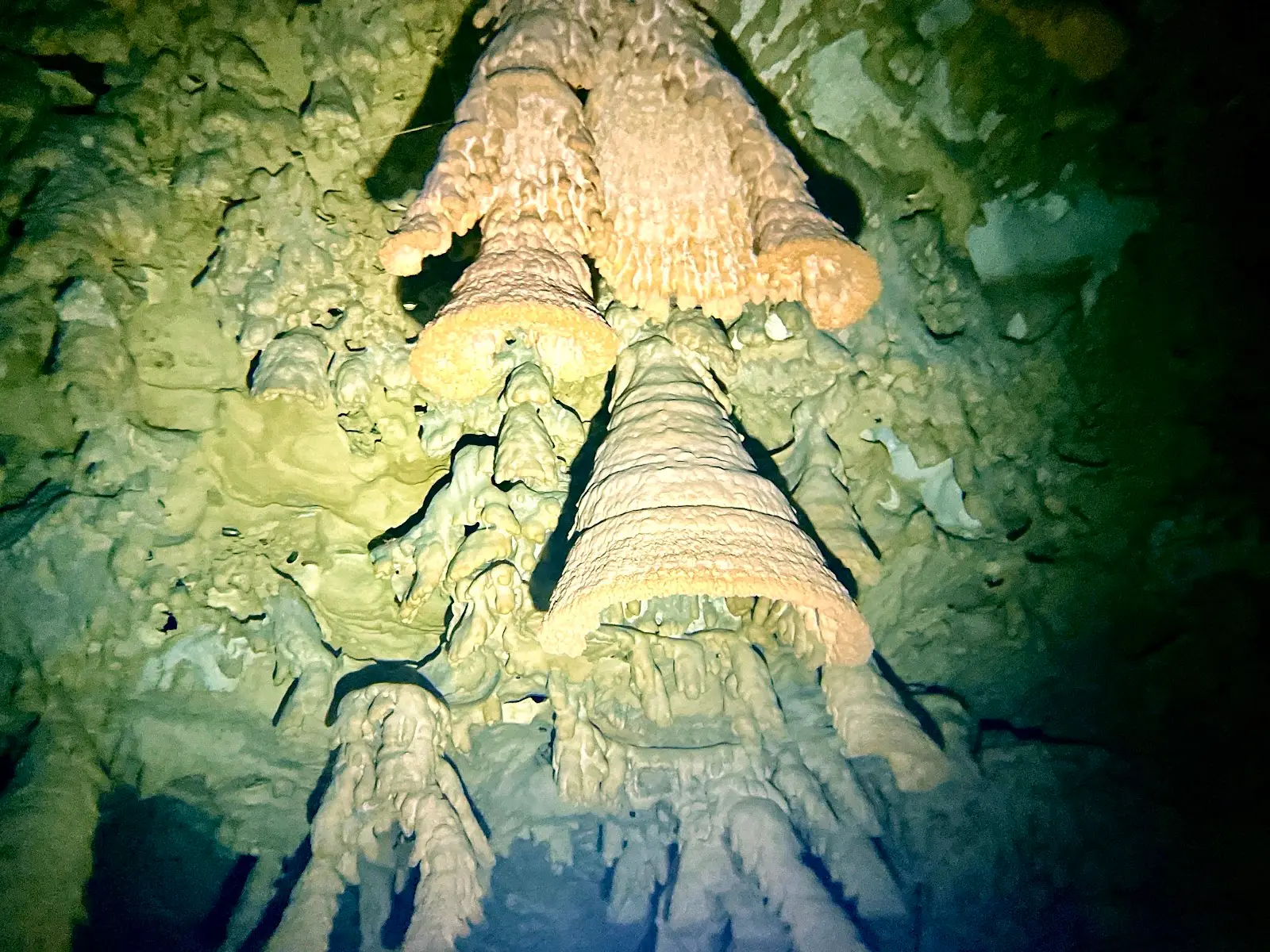
Somewhere around your second or third cenote dive, a thought arrives that changes some divers’ lives: what’s back there, past the sign, beyond the daylight? The Riviera Maya is the world capital of cave diving — home to Sac Actun and Ox Bel Ha, the two longest underwater cave systems on Earth, with hundreds of kilometers of mapped passage running right beneath the highway. If the question has gotten under your skin, this is the roadmap.
Cavern vs. Cave: Where the Line Actually Is
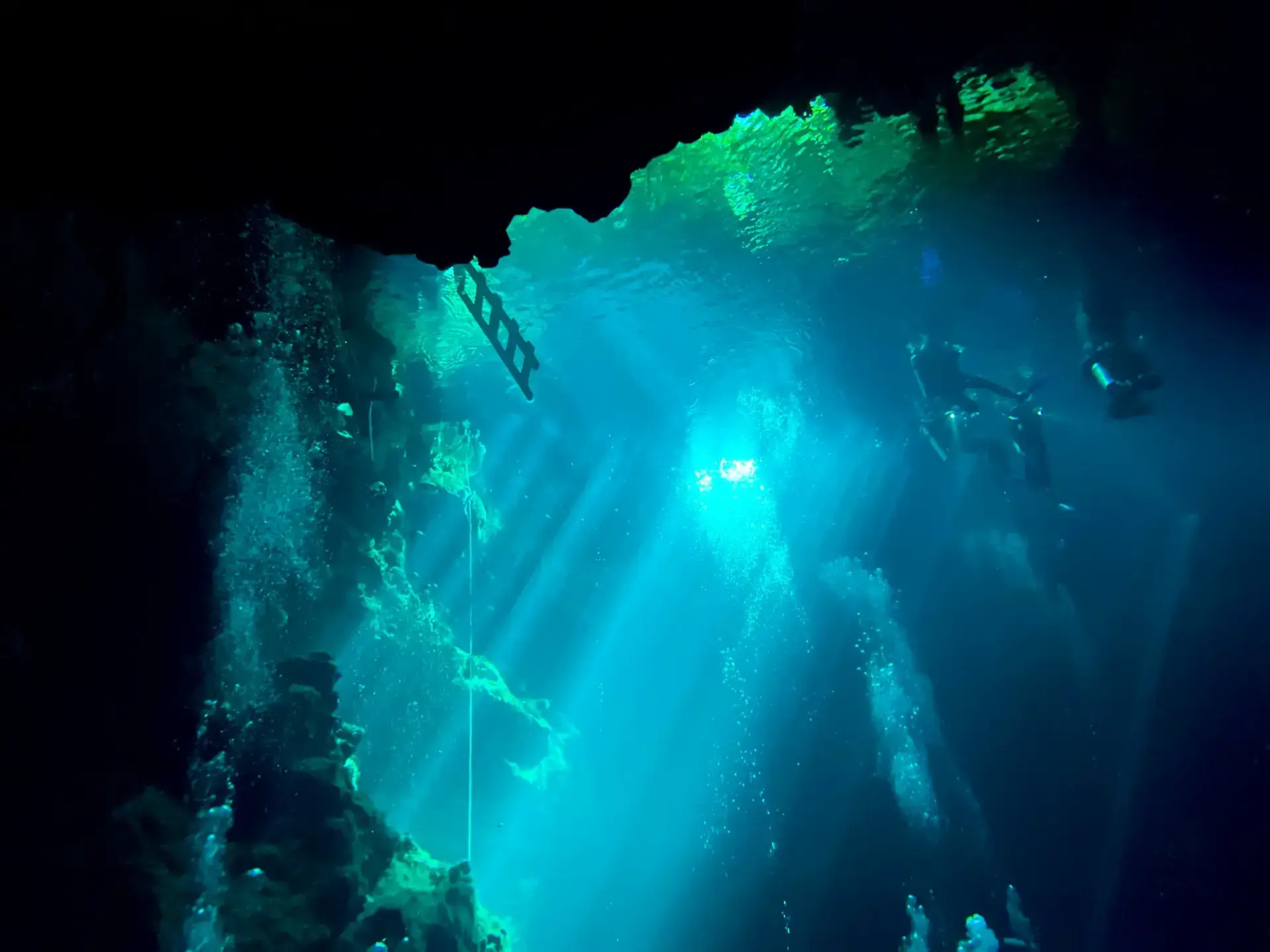
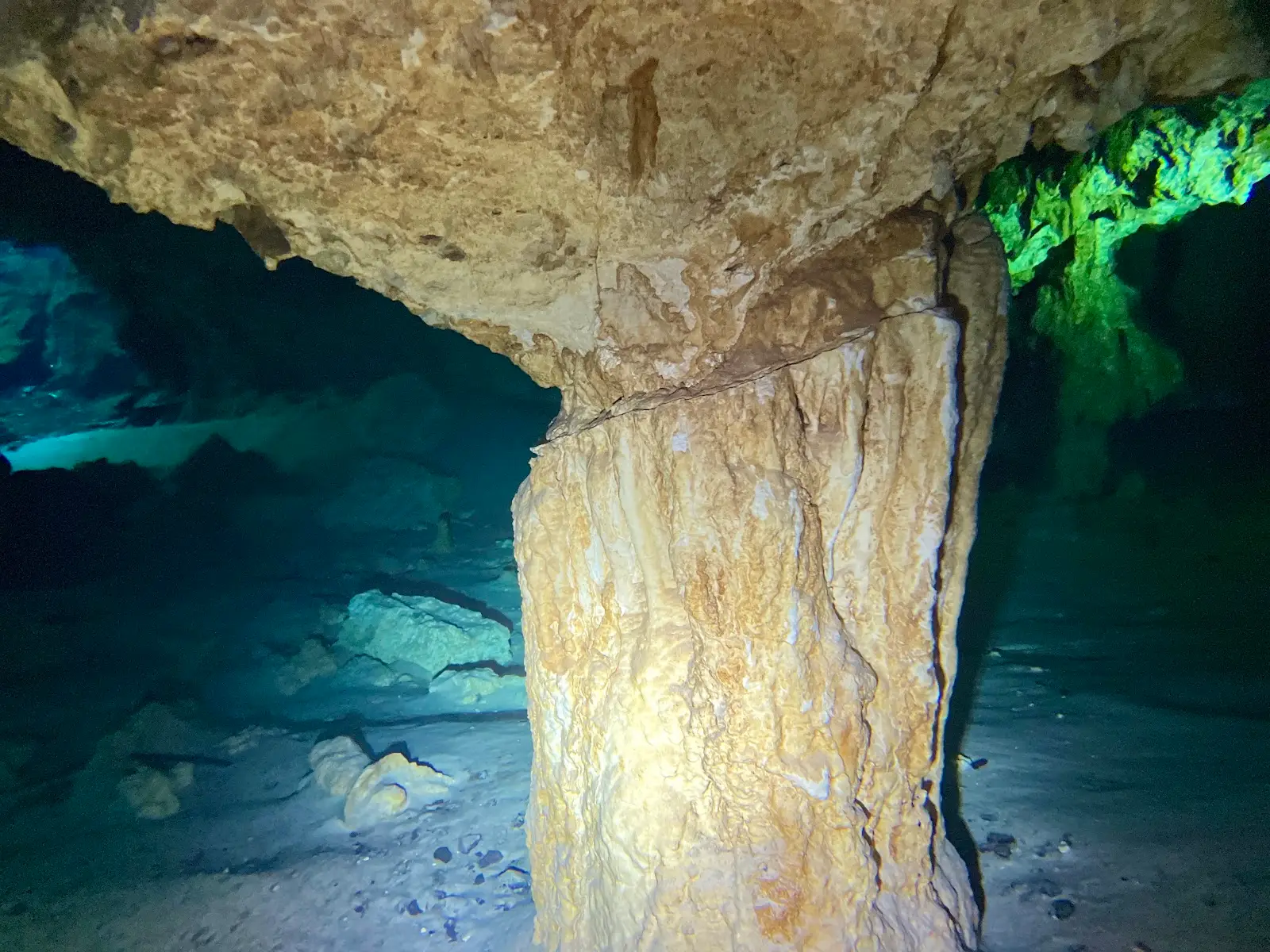
On a guided cavern dive, you remain in the daylight zone, on a permanent line, within defined depth and distance limits — that is why cavern routes are open to Open Water divers with a guide. Cave diving begins where daylight ends. Past that point the rules change completely: redundant gas supplies, primary and backup lights, precise line protocols, gas planning by thirds, and training measured in weeks, not hours. The famous warning signs at the cavern limit are not decoration — they mark the border between two different sports.
Why Mexico Is the Place to Learn
- The caves themselves: warm (24–25°C), spectacularly clear, largely current-free, and decorated like nowhere else on the planet — conditions that let training focus on skills, not survival against cold and darkness.
- Instructor density: the Riviera Maya hosts one of the largest communities of active cave instructors and explorers in the world.
- Progression on tap: hundreds of sites from friendly training caves to world-class exploration, all within an hour of Playa del Carmen.
The Path: From Open Water to Full Cave
Step 1 — Build your foundation
Cave training is built on mastery of basics under stress. Before anything technical, you want: an Advanced Open Water certification (9,000 MXN, 3 days with us), a Rescue Diver course (9,000 MXN — the course every serious diver should take anyway), and real dive experience. Cavern dives in the cenotes are the perfect proving ground: they demand the flat trim, calm breathing and delicate finning that cave instructors expect on day one.
Step 2 — Buoyancy is the entry ticket
Ask any cave instructor what fails students, and the answer is rarely theory — it is control. Perfect neutral buoyancy, back-kicks, helicopter turns, no silt, no contact. Spend dedicated dives on this before your course and you will get far more out of it.
Step 3 — Formal cave training
The standard progression (under agencies like TDI — we are an SDI/TDI center) runs Cavern → Intro to Cave → Full Cave, often taught back-to-back over one to two intensive weeks. You will learn line work and lost-line drills, gas management by thirds, zero-visibility protocols, equipment redundancy (doubles or sidemount), and — hardest of all — the discipline to turn a dive early. Ask us about current training options and we will point you to the right path and instructor for your goals.
What Cave-Certified Divers Get to Do Here
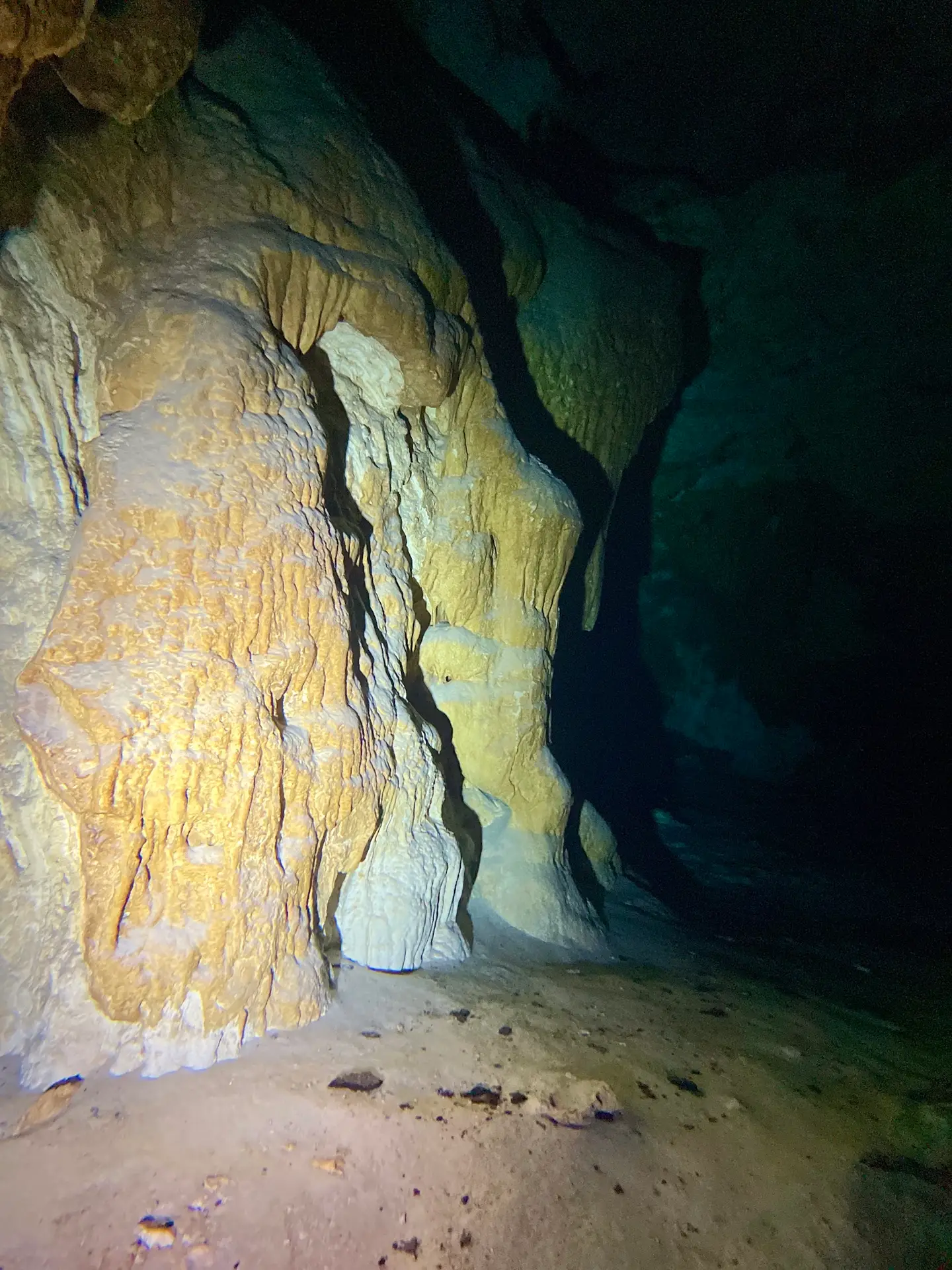
For certified full cave divers, the Riviera Maya is simply the best destination on Earth. At Xibalba Divers MX we run guided cave dives tailored to your experience and ambitions — quiet decorated passages, sweeping tunnels, and the systems you have read about for years. Pricing runs 5,000 MXN with one set of doubles or 7,000 MXN with two sets, with dive plans built around your goals, a strict safety-first approach and deep respect for these irreplaceable environments.
How Long Does It Take?
From zero to full cave is realistically a few months to a couple of years, depending on your starting point and how much you dive. A committed diver can stack the recreational prerequisites (Open Water → Advanced → Rescue) across two or three trips, log cenote and reef experience in between, then dedicate one long visit to cave training. Plenty of our guests structure their Mexico vacations exactly this way — and there are far worse excuses to keep coming back to the Caribbean.
The Mindset That Matters
Cave diving’s safety record among trained divers is strong for one reason: culture. Plan the dive, dive the plan. Any diver can turn any dive at any time, no questions asked. Thirds are sacred. The cave will be there tomorrow; your job is to make sure you are too. If that discipline appeals to you — if checklists sound like freedom rather than bureaucracy — you will love this sport.
Frequently Asked Questions
Can I try cave diving without certification?
No — but you do not need to. Guided cavern routes in cenotes like the ones in our most beautiful cenotes guide show you the magic legally and safely with an Open Water card. The caves beyond the signs are for trained cave divers only.
Do I need to own technical equipment first?
Not to start the journey. Build skills first; acquire gear as training requires it. Ask us for honest advice on sidemount vs. doubles before you spend money.
Is cave diving dangerous?
Untrained cave diving is extraordinarily dangerous — that is what the warning signs are about. Trained, rule-following cave divers operate with multiple redundancies and a strong safety record. The training exists precisely to close that gap.
What certification do I need for guided cave dives with you?
Full cave certification, verified when you book. Not there yet? Tell us where you are on the path and we will help you plan the next step.
What Divers Say
Read recent reviews from guests of Xibalba Divers MX.
Start Your Journey Into the Caves
From your first cavern dive to full cave adventures, we can guide the whole path — honest advice, small groups and a safety-first culture. Tell us your certification level and your goal.