


Cenote diving · Advanced Open Water
El Pit is the most dramatic dive in the region. A single vertical shaft that drops past 100 metres, filled in the morning with colossal beams of light that plunge to a hazy hydrogen sulphide layer around 30 metres, where tree branches poke through the mist like a drowned forest. We pair it with Nicte Ha, a shallow flower garden of a cenote, for a gentle second dive. Advanced Open Water is required, and the day runs with a maximum of four divers per guide.


Small groups, local guides, honest site advice. Based in Playacar, Playa del Carmen. Read our Google reviews
The experience
Why El Pit is the dive people fly here for
Most cenotes impress you with detail. El Pit impresses you with scale. The shaft is wide open, the water is so clear that the surface looks like a skylight from 30 metres down, and on a sunny morning the beams reach all the way to the sulphide layer. Divers regularly rank it among the best dives of their lives, and it is the dive our Advanced divers ask about first.
The descent takes you through a halocline, where fresh and salt water meet in a shimmering band, and on to the cloud itself: a dense white layer of hydrogen sulphide formed by decomposing leaves and branches that fell into the cenote over centuries. Fallen trees rise out of it like a forest in fog. It is silent, strange and unforgettable.
The two dives
Dive 1: El Pit
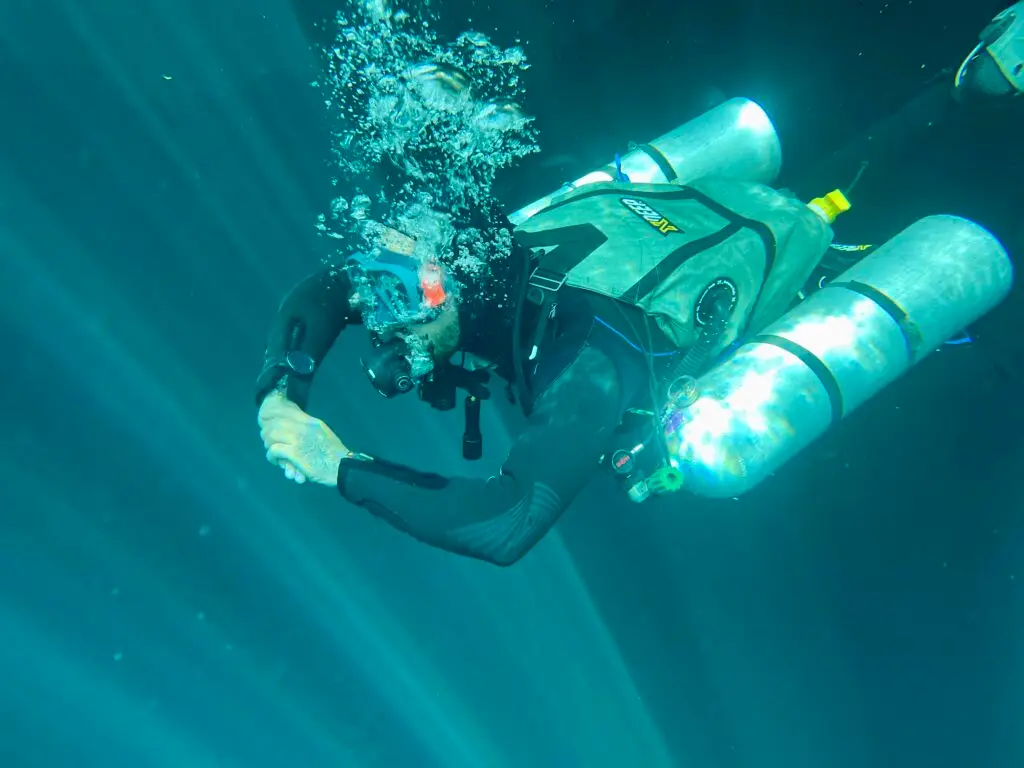
After a detailed briefing we descend along the wall of the shaft with the beams overhead. Your guide sets the maximum depth for the group, typically around 30 metres, just at or above the sulphide layer, and keeps the profile conservative. You spend the deepest minutes looking at the drowned forest and the light from below, then ascend slowly along the wall with a safety stop in the open shaft, where the beams are at their brightest. Bottom time is shorter than a shallow cenote dive because of the depth.
Dive 2: Nicte Ha
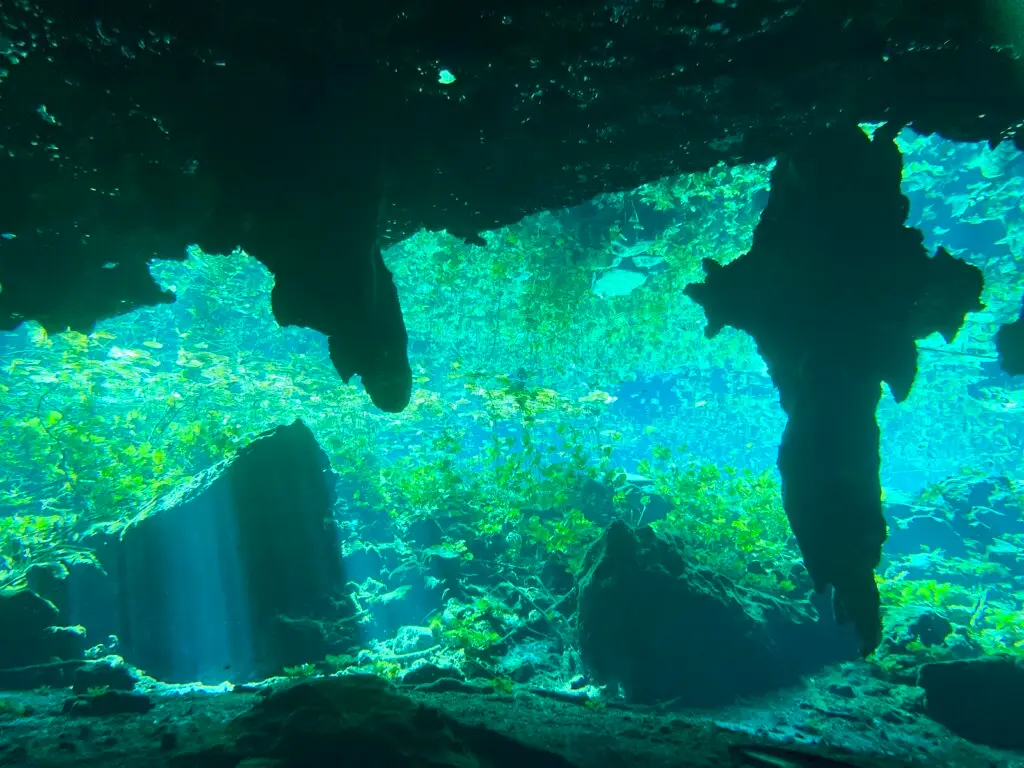
Nicte Ha is the opposite of El Pit: a shallow, open cenote with water lilies on the surface, dappled light through the leaves and a cavern line beneath. It is a macro photographer’s dream and the ideal second dive after a deep profile, relaxed and bright with plenty of time to look at the small life among the roots and formations.
Who El Pit and Nicte Ha is for
- Advanced Open Water divers who want the famous beams and the sulphide cloud
- Divers comfortable at 30 metres with steady buoyancy in fresh water
- Wide angle photographers and videographers: the beams are best on a sunny morning
- Divers who have already done a shallow cenote such as Dos Ojos or Chac Mool and want the next step
Advanced Open Water is required. If you are Open Water certified, the Advanced Open Water course takes three days and finishes ready for El Pit. Newly certified Advanced divers usually enjoy it more after a shallow cenote day first.
The rules that keep cenote diving safe
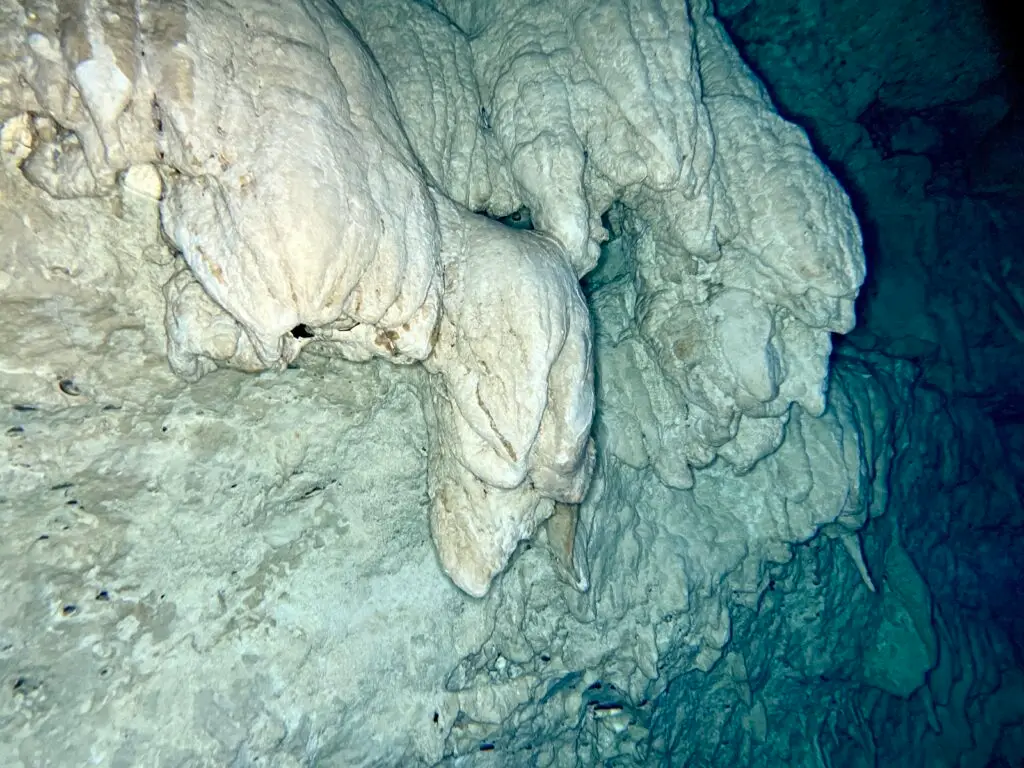
- Cavern, not cave: we stay within the daylight zone on a permanent guideline. Full cave diving is a separate activity that requires cave certification
- One guide for a maximum of four divers, and a conservative deep profile set at the briefing
- No gloves, no knives, no touching formations or the fallen trees, and no fin contact with the rock
- No sunscreen or insect repellent before the dive, because the cenote water is the region’s drinking water
- Cameras are welcome. The cenote charges a camera fee of 300 to 500 MXN that goes to the landowners who maintain the site
Key details
El Pit at a glance
- Location
- Dos Ojos cenote park area near Tulum, about 45 minutes south of Playa del Carmen
- Dives
- Dive 1 El Pit, the deep shaft. Dive 2 Nicte Ha, a shallow open cenote
- Maximum depth
- Around 30 metres at El Pit, set by your guide. Nicte Ha stays shallow
- Dive time
- A shorter deep profile at El Pit, then around 45 minutes at Nicte Ha
- Water
- Fresh water above a halocline, 24 to 26 °C, visibility often beyond 30 metres
- Certification
- Advanced Open Water Diver or equivalent, with logged dives and good buoyancy control
- Group size
- Maximum four divers per guide
- Price
- 3,800 MXN per diver for both dives with a certified cenote guide
- Camera fee
- 300 to 500 MXN, paid at the cenote if you bring a camera or GoPro
Good to know
El Pit diving questions
What divers ask us before they book this cenote.
Do I need Advanced Open Water to dive El Pit?
Yes. El Pit is a deep dive to around 30 metres and Advanced Open Water or an equivalent certification is required, along with logged dives and good buoyancy control. Our Advanced course takes three days if you need it.
How deep is El Pit?
The shaft drops past 100 metres, but we turn much shallower. Your guide sets the depth for the group, typically around 30 metres, at or just above the hydrogen sulphide layer.
What is the hydrogen sulphide cloud?
A dense white layer that forms where leaves and branches decompose in still, oxygen poor water. It sits at around 30 metres in El Pit and looks like fog with tree branches rising through it. Your guide keeps the group at a safe depth above or briefly at the layer.
When are the light beams best?
On a sunny morning. The beams come in strongest when the sun is high and the sky is clear, which is why we dive El Pit first, before the second dive at Nicte Ha.
What is Nicte Ha like?
A shallow, open cenote with water lilies, soft light and a cavern line beneath. It is calm and bright, ideal after a deep dive, and popular with macro photographers.
Can El Pit be my first cenote dive?
If you hold Advanced Open Water with recent logged dives, yes. Most divers enjoy it more after a shallow cenote day such as Chac Mool or Dos Ojos, where you get used to fresh water buoyancy and cavern procedures first.
Next step
Ready to dive El Pit?
Send us your dates, certification level and logged dives and we will confirm availability, pickup and everything included.
Keep exploring
More cenote dives from Playa del Carmen
El Pit is one of three deep routes on our list. Angelita has the other famous sulphide cloud, the one that photographs as an underwater river, and Zapote hides the Hells Bells formations near Puerto Morelos. Both also require Advanced Open Water. For a shallow day in the same area, Dos Ojos is minutes away. See every route and price on the cenote diving in Playa del Carmen page, or browse the most beautiful cenotes near Playa del Carmen.
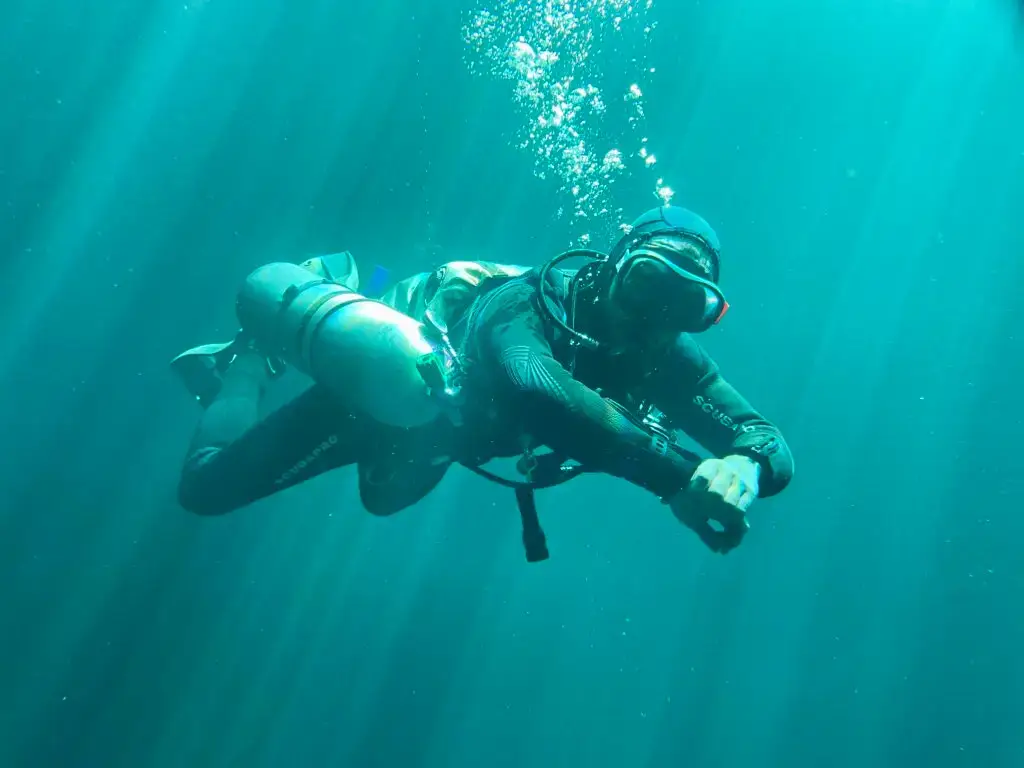 Cenote diveCenote AngelitaThe underwater river: a 30 metre descent to the sulphide cloud and its island of fallen trees.
 Cenote diveDos OjosThe famous one: two sunlit cavern dives on the Barbie Line and the Bat Cave.
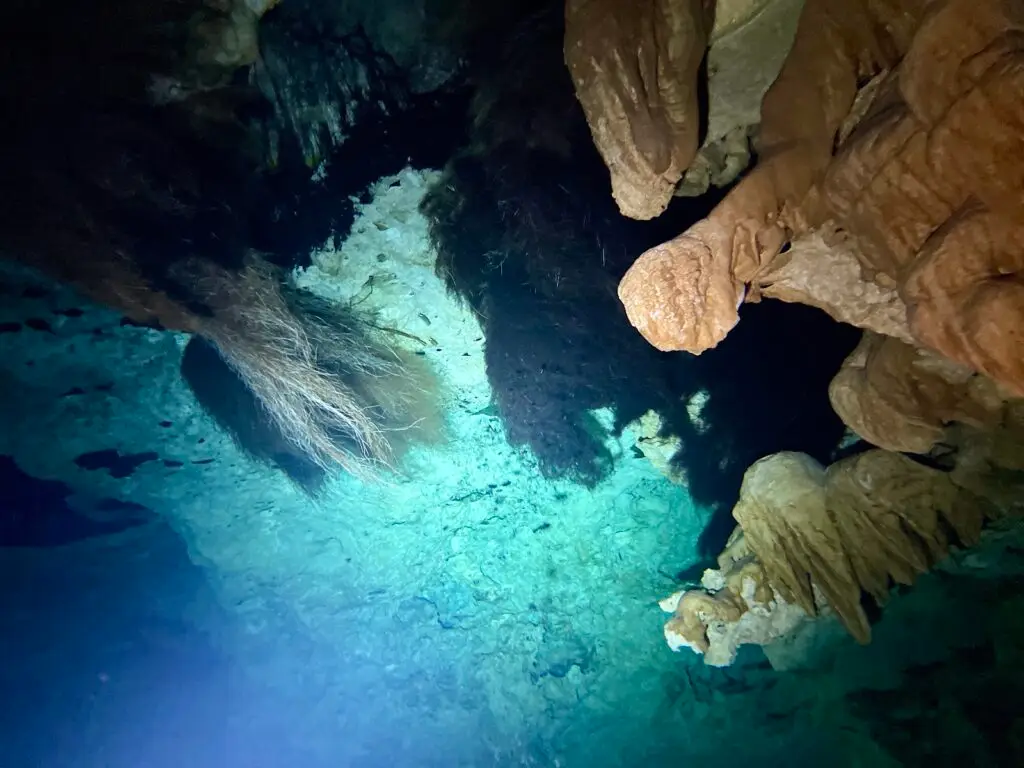 Cenote diveCenote DreamgateThe most decorated cavern in the region: curtains of stalactites on the upstream and downstream lines.