


Cenote diving · Advanced Open Water
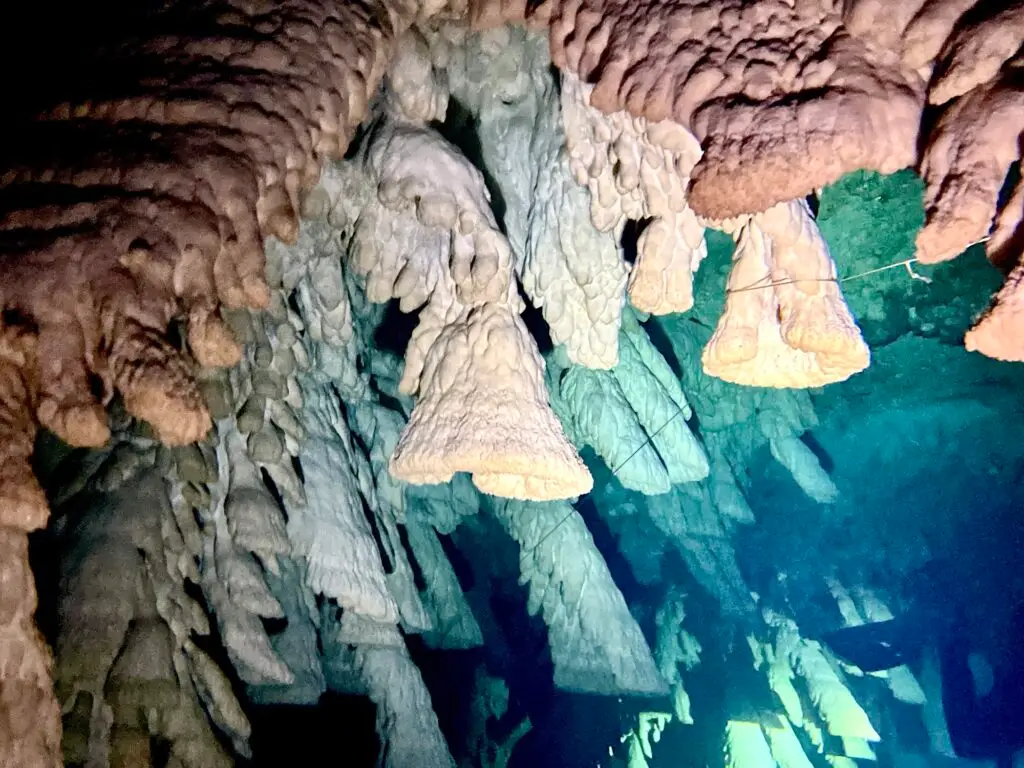
Zapote is the dive that feels like another planet. On the Ruta de los Cenotes near Puerto Morelos, a deep, dark shaft hides the strangest formations in the Yucatán: the Hells Bells, hollow bells up to two metres long that grow downward from the walls and hang silent over the void, with a wispy hydrogen sulphide layer beneath them. Scientists are still working out exactly how they form. We pair it with a second dive at Maravilla or Kin Ha, two quiet cenotes on the same road. Advanced Open Water is required, and the day runs with a maximum of four divers per guide.


Small groups, local guides, honest site advice. Based in Playacar, Playa del Carmen. Read our Google reviews
The experience
Why the Hells Bells are found almost nowhere else
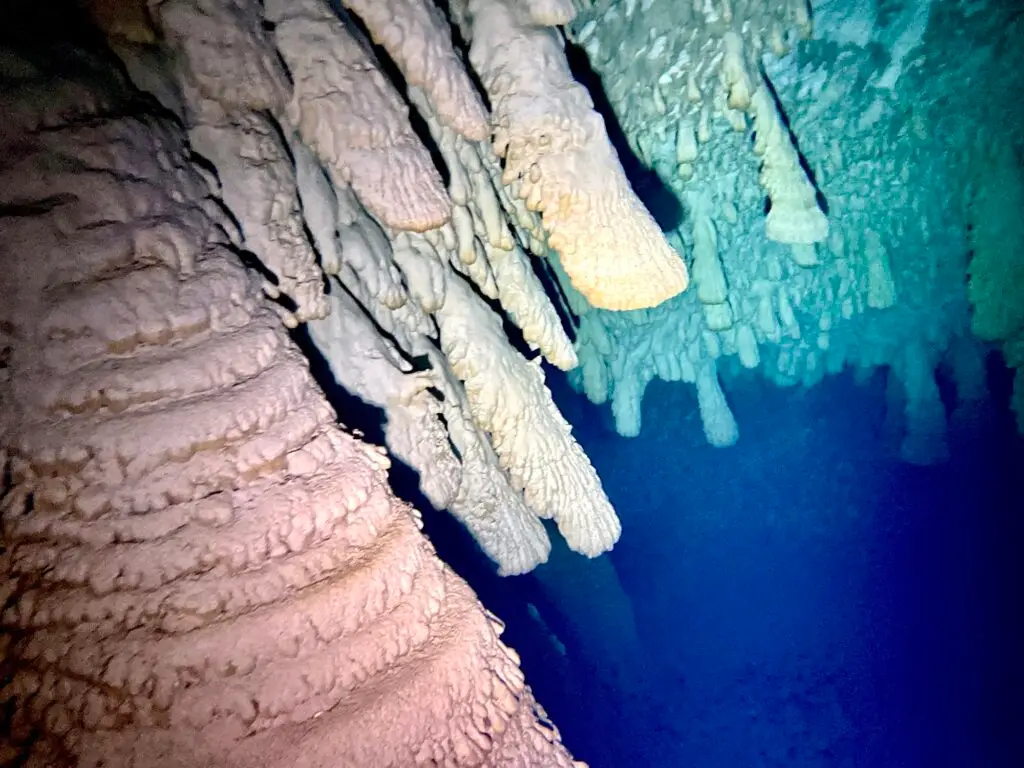
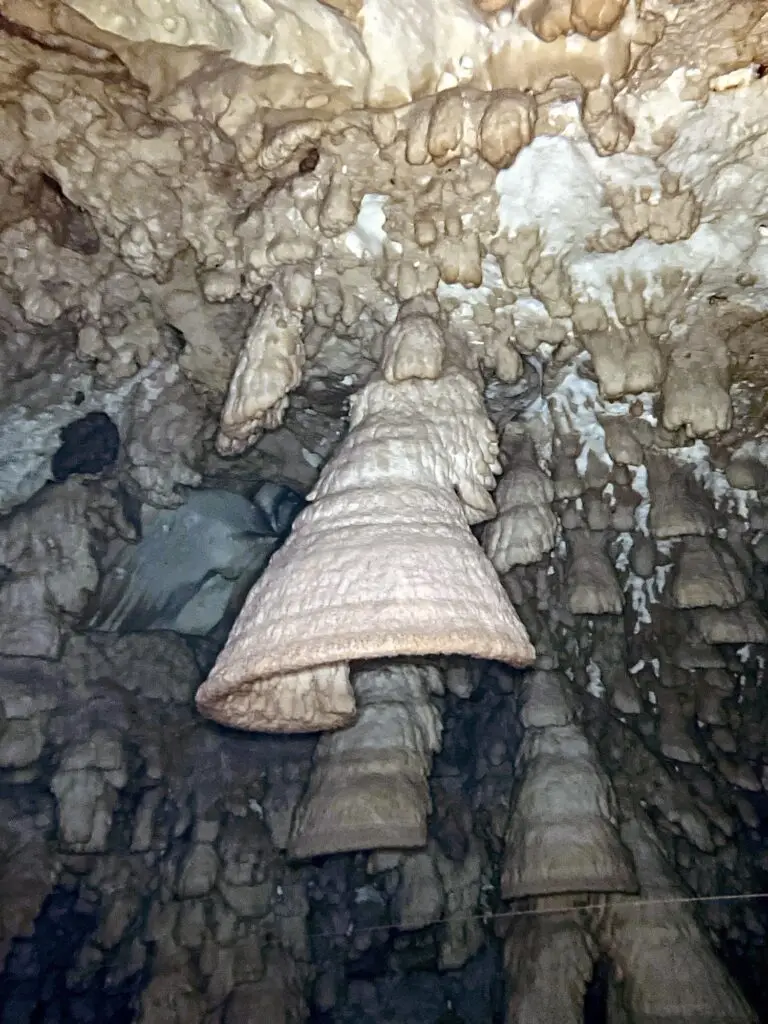
Most cenote formations are the familiar ones: stalactites, columns, curtains. The bells of Zapote are different. They are hollow, they widen towards the bottom like the bells of a church, they grew under water rather than in air, and they cluster on the walls of the shaft in their hundreds, some the size of a diver. The best explanation so far involves bacteria living at the boundary between the oxygen rich water above and the sulphide layer below, building calcite downwards over thousands of years. Whatever the mechanism, there is nothing else like them on any dive you have done.
The dive itself is deep and atmospheric. The shaft narrows as you descend, the light fades to a dim green, and then the bells appear on every side, pale against the dark rock, with the white cloud of the sulphide layer drifting beneath. Watch our film of the Hells Bells before you come and you will still gasp on the day.
The two dives
Dive 1: Zapote
After a full deep dive briefing we descend the open shaft as a group. The bells begin around 28 metres and continue below, and your guide sets the maximum depth for the group, typically around 30 metres, at or above the sulphide layer. You spend the deepest minutes drifting slowly along the wall with the bells at arm’s length, never touching, then ascend along the wall with a safety stop in the upper shaft. Bottom time is short because of the depth, so this is a deep dive with a conservative profile rather than a long tour.
Dive 2: Maravilla or Kin Ha
The second dive is chosen on the day. Maravilla, the marvel, is a cenote almost nobody dives: dramatic rock architecture, moody light and no queue, the cenote in our film Into the Light. Kin Ha, a few minutes along the same road, is a quieter park cenote with a big chamber and a route your guide picks for the group’s depth and comfort. Either way the second dive is gentler than Zapote and a good place to let the first one sink in.
Who Zapote is for
- Advanced Open Water divers who want rare geology rather than sunbeams
- Divers comfortable at 30 metres in low light with steady buoyancy
- Photographers and videographers: a wide lens, a strong light and a diver in the frame for scale
- Divers who have already done El Pit or Angelita and want the third deep cenote
Advanced Open Water is required. Open Water divers can reach it in three days with the Advanced Open Water course. Newly certified Advanced divers usually enjoy Zapote more after a shallow cenote day first.
The rules that keep cenote diving safe
- A conservative deep profile agreed at the briefing and led by your guide
- One guide for a maximum of four divers
- No touching the bells or the walls, and no fin contact with the rock. The bells are fragile and irreplaceable
- No sunscreen or insect repellent before the dive, because the cenote water is the region’s drinking water
- Cameras are welcome. Each cenote charges a camera fee of 300 to 500 MXN that goes to the landowners who maintain the site
Key details
Zapote at a glance
- Location
- Ruta de los Cenotes near Puerto Morelos, about 50 minutes’ drive north of Playa del Carmen
- Dives
- Dive 1 Zapote, the Hells Bells. Dive 2 Maravilla or Kin Ha, chosen on the day
- Maximum depth
- Around 30 metres at Zapote, set by your guide. The bells hang from around 28 metres down
- Dive time
- A shorter deep profile at Zapote, then a relaxed second dive
- Water
- Fresh water, dark and still, 24 to 26 °C, with a hydrogen sulphide layer below the bells
- Certification
- Advanced Open Water Diver or equivalent, with logged dives and good buoyancy control
- Group size
- Maximum four divers per guide
- Price
- 3,800 MXN per diver for both dives with a certified cenote guide
- Camera fee
- 300 to 500 MXN, paid at the cenote if you bring a camera or GoPro
Good to know
Zapote diving questions
What divers ask us before they book this cenote.
Do I need Advanced Open Water to dive Zapote?
Yes. The Hells Bells hang from around 28 metres down and the dive runs to around 30 metres, so Advanced Open Water or an equivalent certification is required, along with logged dives and good buoyancy control.
What are the Hells Bells?
Hollow, bell shaped calcite formations up to two metres long that grow downward from the walls of Cenote Zapote, under water, above a hydrogen sulphide layer. They are found almost nowhere else in the world, and scientists are still working out exactly how they form.
How deep is Zapote?
The cenote is much deeper than we dive. The bells begin around 28 metres and your guide sets the maximum depth for the group, typically around 30 metres, at or above the sulphide layer.
Is there a hydrogen sulphide cloud?
Yes, a wispy white layer beneath the bells, formed where organic matter decomposes in still, oxygen poor water. It is part of what makes the bells possible, and part of what makes the dive feel like another planet.
Which second dive do you choose, Maravilla or Kin Ha?
We choose on the day based on conditions, the group and what is open. Maravilla for the rock architecture and the light, Kin Ha for a big, quiet chamber with an easy profile. Both are minutes from Zapote.
How far is Zapote from Playa del Carmen?
About 50 minutes by road, north past Puerto Morelos onto the Ruta de los Cenotes. Expect to be back in Playa del Carmen in the afternoon.
Next step
Ready to dive Zapote?
Send us your dates, certification level and logged dives and we will confirm availability, pickup and everything included.
Keep exploring
More cenote dives from Playa del Carmen
Zapote is one of three deep routes on our list, with El Pit and Angelita, and many Advanced divers do all three in one week. For a shallow day close to Playa del Carmen, Chac Mool and Kukulkan is the classic. See every route and price on the cenote diving in Playa del Carmen page, or browse the most beautiful cenotes near Playa del Carmen.
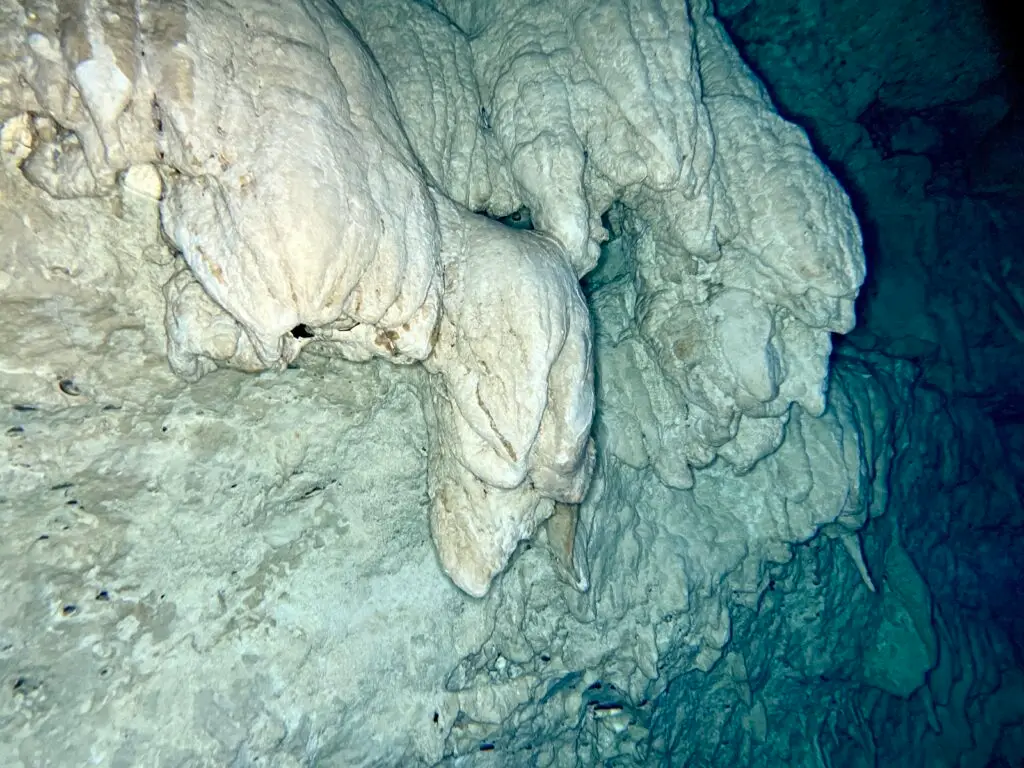 Cenote diveEl Pit and Nicte HaThe deep cathedral: colossal light beams down to the hydrogen sulphide cloud, then shallow Nicte Ha.
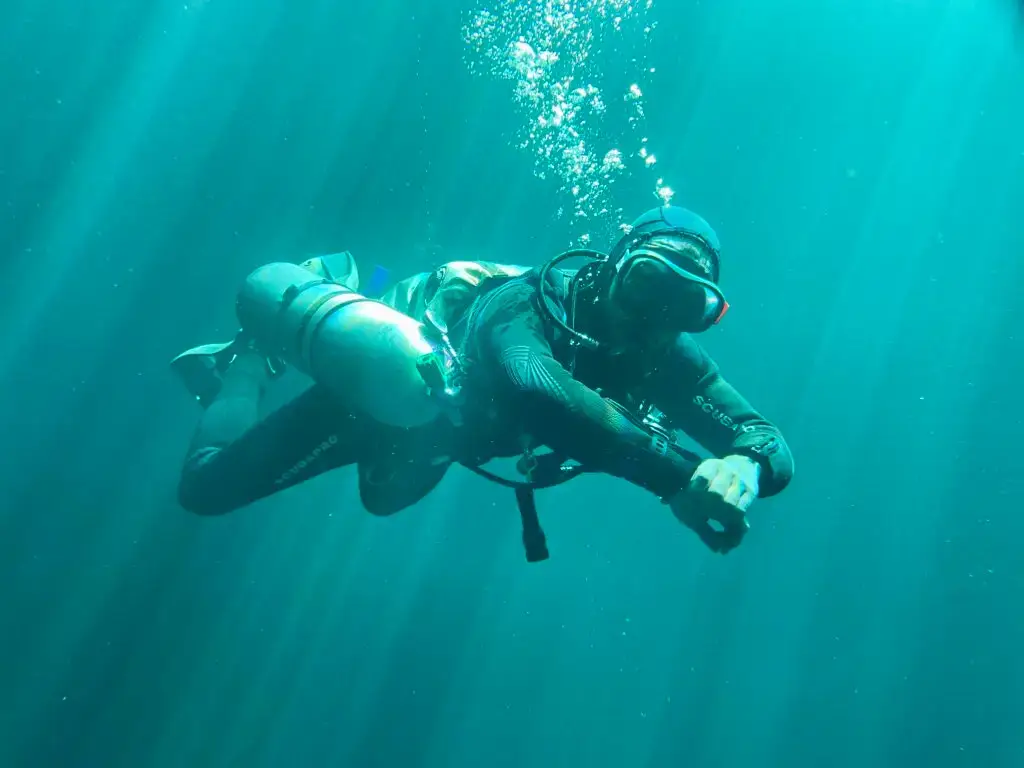 Cenote diveCenote AngelitaThe underwater river: a 30 metre descent to the sulphide cloud and its island of fallen trees.
 Cenote diveDos OjosThe famous one: two sunlit cavern dives on the Barbie Line and the Bat Cave.