


Cenote diving · Open Water
Dos Ojos is the cenote most divers ask for by name. Two cavern dives in one system, sunlit passages, fresh water with visibility that often passes 100 metres, and a maximum depth of about 10 metres that suits any Open Water diver. From Playa del Carmen it is about an hour south near Tulum, and we run it as a full cenote day with a maximum of four divers per guide.


Small groups, local guides, honest site advice. Based in Playacar, Playa del Carmen. Read our Google reviews
The experience
Why Dos Ojos is the cenote everyone asks for
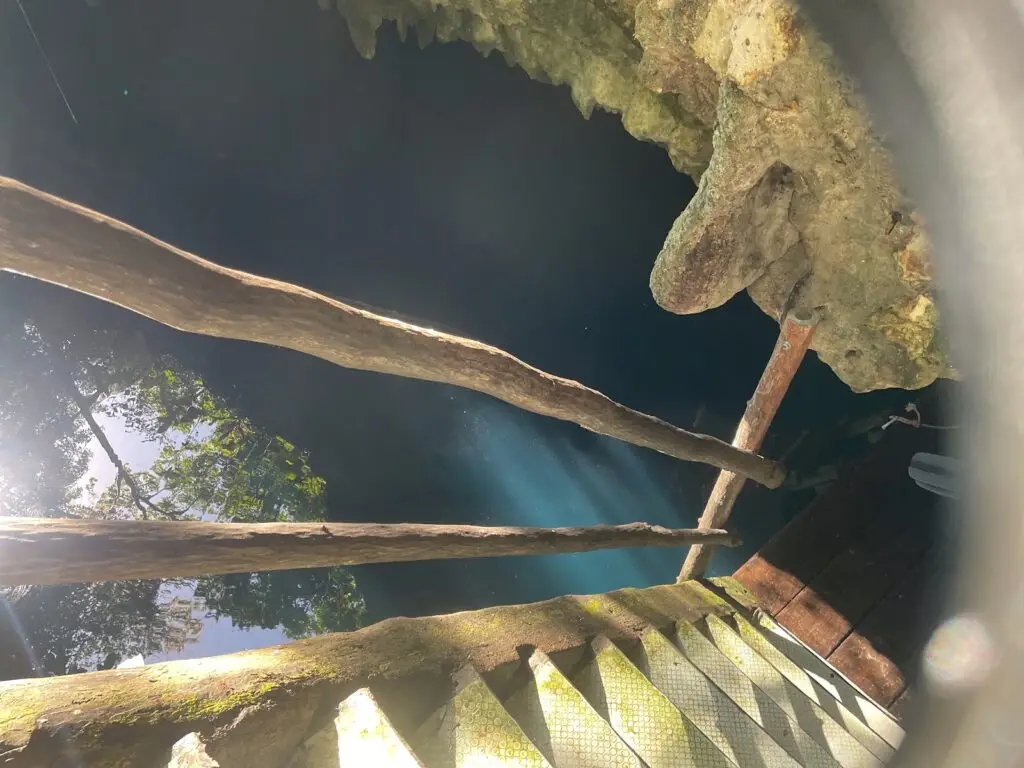
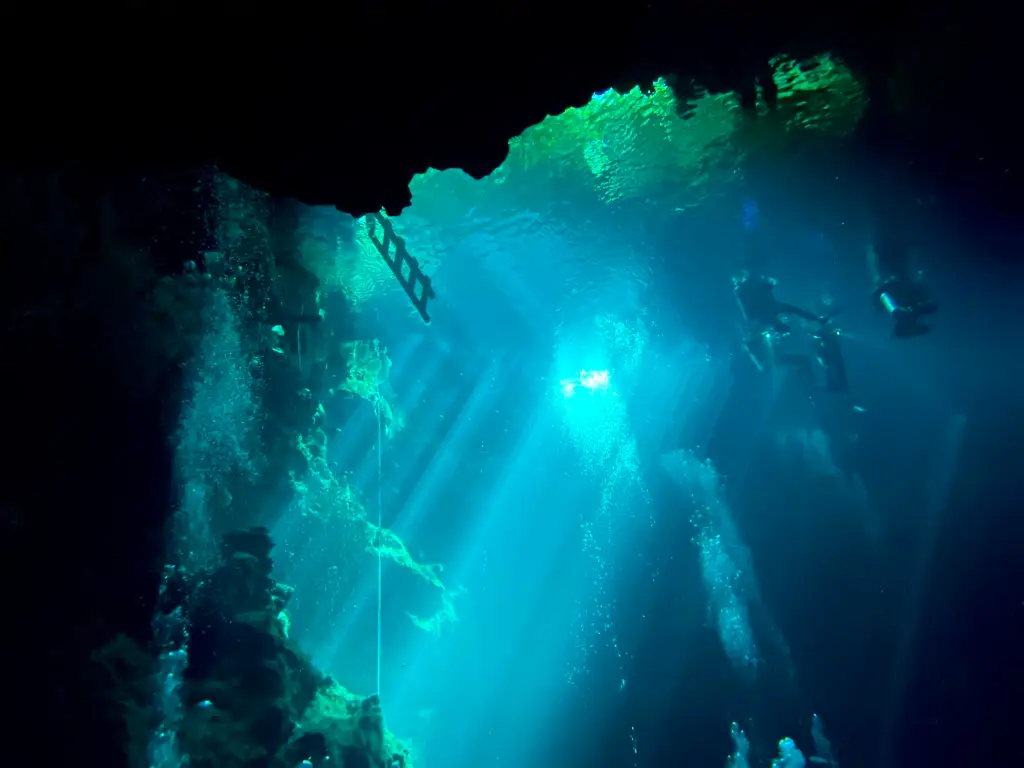
Dos Ojos means “two eyes”: two open sinkholes joined by a flooded cavern passage. Sunlight pours through both openings and lights up the rock from inside, so the first thing you see on descent is a blue window in the ceiling and beams of light cutting through perfectly clear water. The cenote is part of the Sac Actun system, the longest known underwater cave system in the world, but the sections we dive stay within the cavern zone where daylight is always in view.
It is shallow, the water is calm, and the two lines feel like two different dives. That combination is why Dos Ojos works as a first cenote dive and still impresses divers who have logged hundreds.
The two dives
Dive 1: the Barbie Line
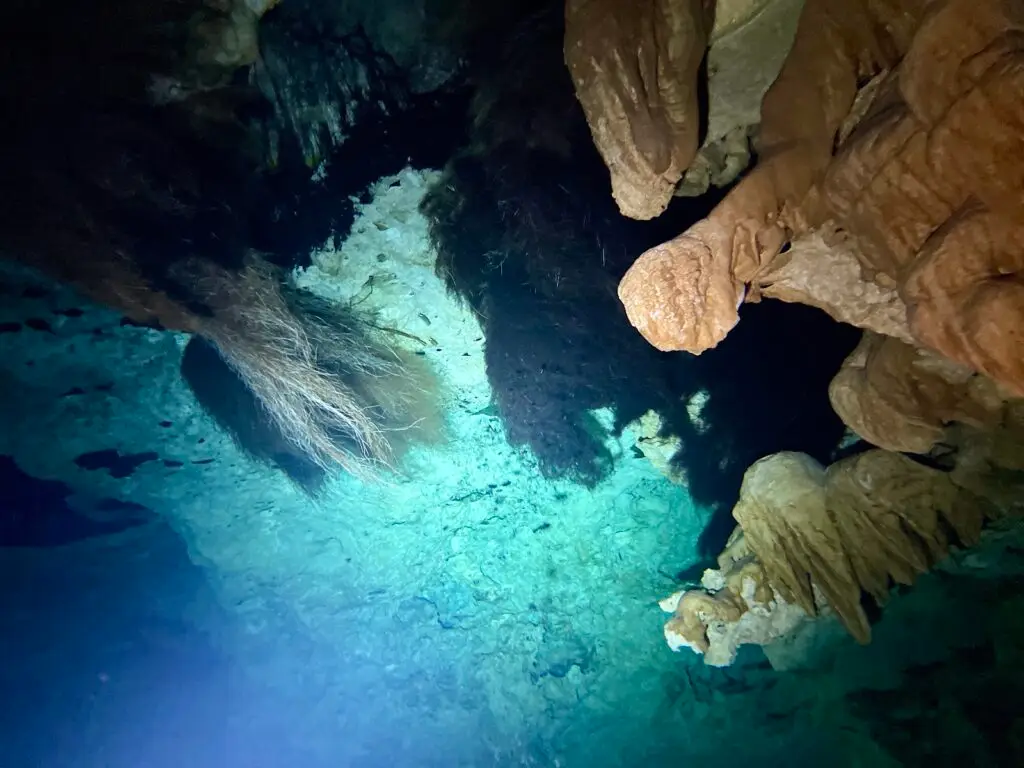
The Barbie Line is the bright one. It loops through wide, open cavern with sunlight entering from both eyes, past stalactites and columns that formed when the cave was dry during the last ice age. Halfway round you meet the marker that gives the line its name, a small plastic doll in the jaws of a toy crocodile. Expect the widest passages, the best light and the easiest navigation of any cenote dive on the coast.
Dive 2: the Bat Cave
The Bat Cave line heads into darker, more decorated cavern and surfaces inside a dome where bats roost above the water. Torches come on, the formations get denser, and the atmosphere feels closer to cave diving while you stay on the permanent guideline and within the daylight zone. Most divers rate it as the more dramatic of the two.
Who Dos Ojos is for
- Open Water certified divers making their first cenote dive
- Divers who want light, formations and photographs rather than depth
- Anyone nervous about darkness: the Barbie Line comes first and stays bright throughout
- Divers who have not been in the water for a while. Tell us when you book and we plan a gentle first dive or a refresher
Advanced Open Water is not required for Dos Ojos. If you want deeper cenotes such as El Pit or Angelita, those routes need Advanced Open Water and a few logged dives.
The rules that keep cenote diving safe
- Cavern, not cave: we stay within the daylight zone on a permanent guideline. Full cave diving is a separate activity that requires cave certification
- One guide for a maximum of four divers
- No gloves, no knives, no touching formations, and no fin contact with the rock
- No sunscreen or insect repellent before the dive, because the cenote water is the region’s drinking water
- Cameras are welcome. The cenote charges a camera fee of 300 to 500 MXN that goes to the landowners who maintain the site
Key details
Dos Ojos at a glance
- Location
- Dos Ojos cenote park near Tulum, about an hour south of Playa del Carmen
- Dives
- Two cavern dives: the Barbie Line and the Bat Cave
- Maximum depth
- About 10 metres
- Dive time
- Around 45 minutes per dive
- Water
- Fresh water, 24 to 26 °C, visibility often over 100 metres
- Certification
- Open Water Diver or equivalent, with comfortable buoyancy control
- Group size
- Maximum four divers per guide
- Price
- 3,400 MXN per diver for both dives with a certified cenote guide
- Camera fee
- 300 to 500 MXN, paid at the cenote if you bring a camera or GoPro
Good to know
Dos Ojos diving questions
What divers ask us before they book this cenote.
Do I need Advanced Open Water to dive Dos Ojos?
No. Open Water Diver or an equivalent certification is enough. Dos Ojos stays around 10 metres deep and both lines are within the cavern zone. Good buoyancy matters more than your certification level.
How deep is Dos Ojos?
The maximum depth on both lines is about 10 metres, which also means long, relaxed dives of around 45 minutes each with plenty of no decompression time.
How cold is the water?
Fresh cenote water sits at 24 to 26 °C all year. Most divers are comfortable in a 3 mm or 5 mm wetsuit for two dives.
Can I bring a camera or GoPro?
Yes. The cenote park charges a camera fee of 300 to 500 MXN, paid on site. Bring your own light if you want colour on the Bat Cave line.
How far is Dos Ojos from Playa del Carmen?
About an hour by road, south past Akumal towards Tulum. Pickup is in the morning and you are back in Playa del Carmen in the early afternoon.
Is Dos Ojos a cave dive?
No. We dive the cavern lines, which stay within sight of daylight on a permanent guideline. That is why Open Water divers can do it. Cave diving beyond the daylight zone requires full cave certification.
Next step
Ready to dive Dos Ojos?
Send us your dates, certification level and recent experience and we will confirm availability, pickup and everything included.
Keep exploring
More cenote dives from Playa del Carmen
Most divers combine Dos Ojos with a second cenote day. Chac Mool and Kukulkan is the classic first cenote route and the closest to Playa del Carmen. El Pit and Nicte Ha adds depth, a hydrogen sulphide cloud and a halocline for Advanced divers. See every route and price on the cenote diving in Playa del Carmen page, or browse the most beautiful cenotes near Playa del Carmen.
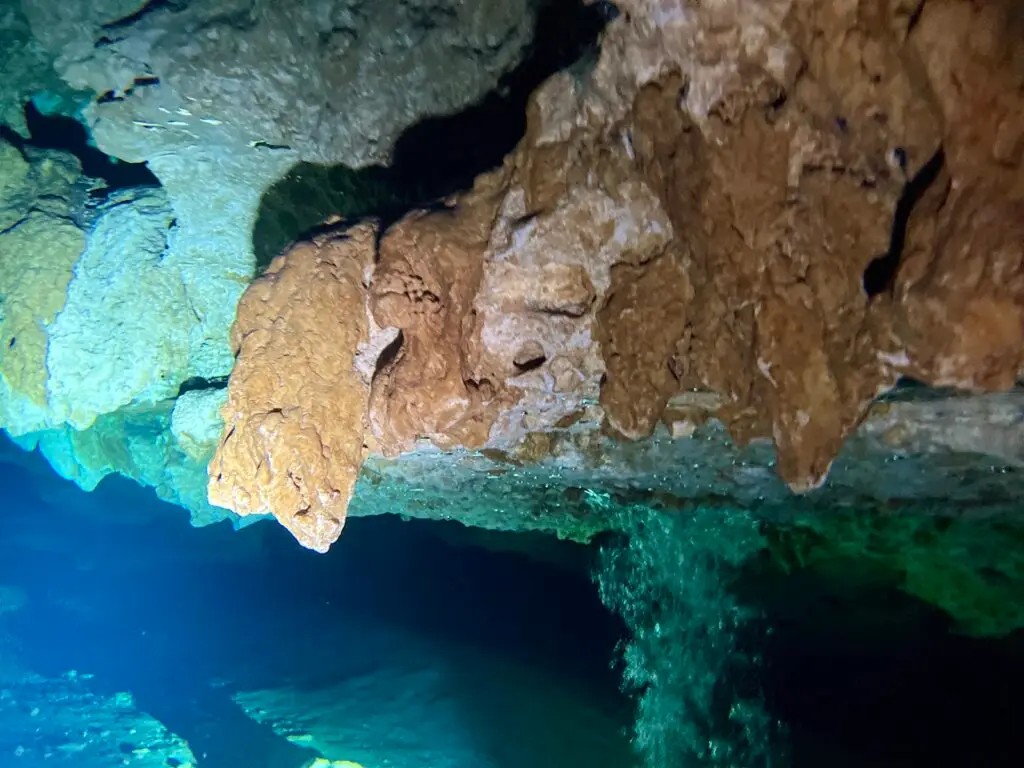 Cenote diveChac Mool and KukulkanThe perfect first cenote: wide caverns, an air dome, a halocline and the Kukulkan light show.
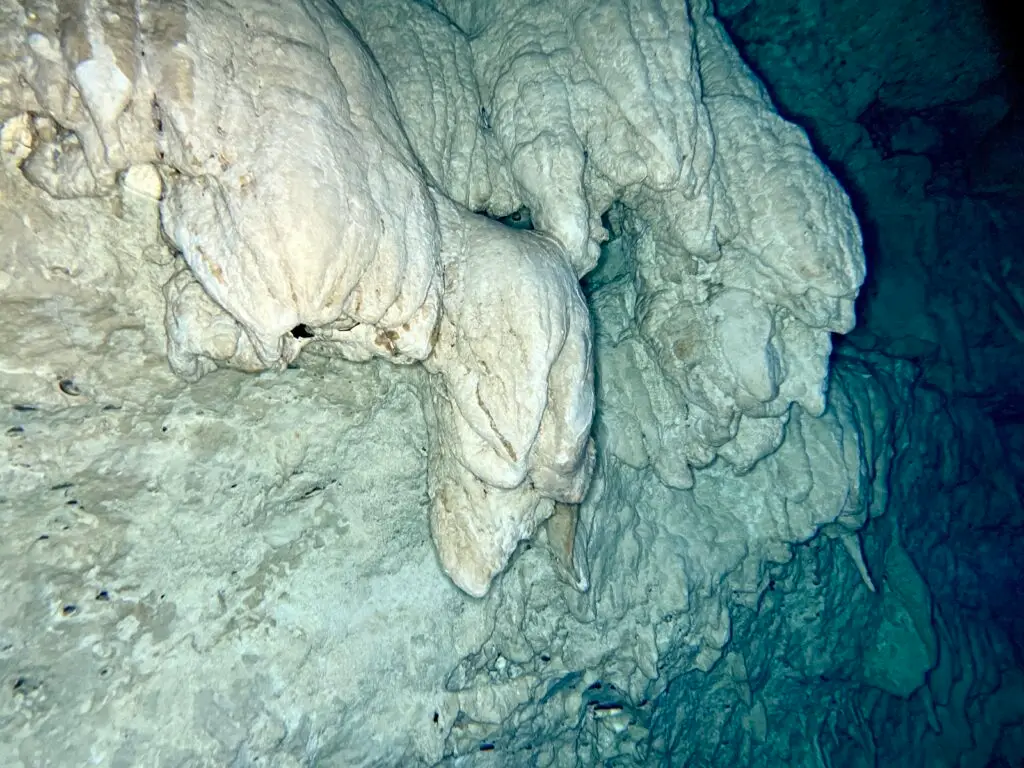 Cenote diveEl Pit and Nicte HaThe deep cathedral: colossal light beams down to the hydrogen sulphide cloud, then shallow Nicte Ha.
 Cenote diveCenote DreamgateThe most decorated cavern in the region: curtains of stalactites on the upstream and downstream lines.