 English English
Seasonal · November to February
Every winter, bull sharks gather on the sand a few hundred metres off the beach in Playa del Carmen. From November to February we dive with them at Shark Point: 24 metres, no cage, a short boat ride and a small group on the sand with a guide who knows the animals. Observation dives with Nitrox and a second reef dive for 2,800 MXN, or the feeding dive run by shark specialists for 4,200 MXN.
Check availability WhatsApp us
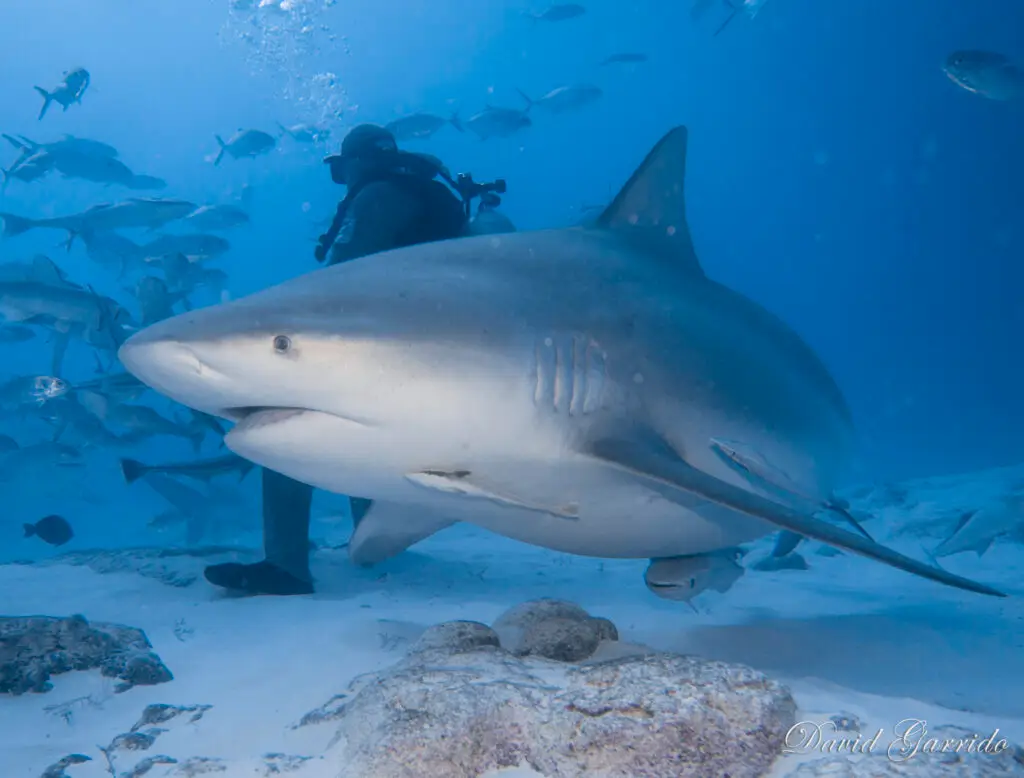
A bull shark cruises past the group at Shark Point, 24 metres down on the sand off Playa del Carmen.


Small groups, guided by Humann, no hidden costs. Based in Playacar, Playa del Carmen. Read our Google reviews
The sharks
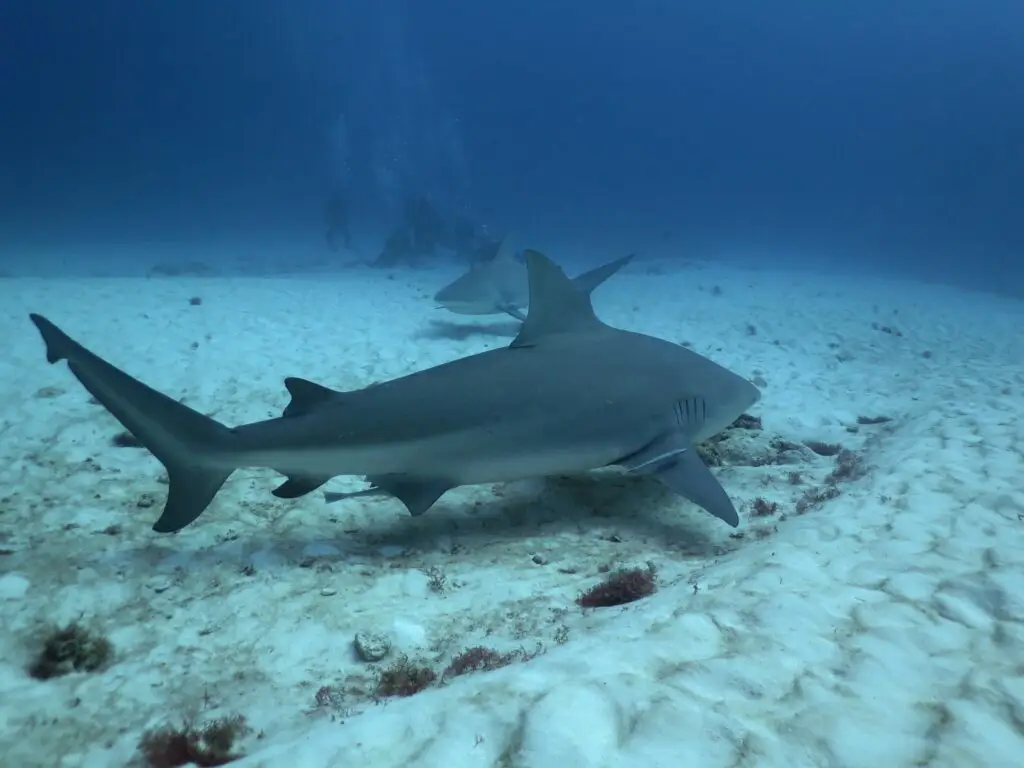
Shark Point is a flat sandy bottom at around 24 metres, minutes from the beach in Playa del Carmen. Between November and February large female bull sharks, most of them between two and three and a half metres, move into these shallow coastal waters, and the site is one of the very few places in the world where certified divers can watch them in open water without a cage, on a short boat ride, in visibility that is usually excellent.
The encounter is calmer than the reputation. You descend as a group, kneel in a line on the sand with the guides positioned around you, keep your hands close and stay low, and the sharks cruise in slow, wide circles at their own pace. The sharks are wild animals, so sightings depend on the day, but in the heart of the season they are consistent.
Outside the shark season, the reefs, the cenotes and Cozumel run all year at our dive centre in Playa del Carmen.

Two options
Not sure which one suits you? Send us your experience and we give you an honest recommendation. The bull shark season and trip guide covers the season, the safety protocols and the ethics in more depth.
How it runs
Shark days need a calm sea, so we schedule them around the weather and keep a spare day where we can. If a cold front cancels the dive, you choose another day or a refund; book the shark dive early in your trip so there is room to move it.
Who it is for
Certified divers who are comfortable holding position calmly at depth. The site sits at around 24 metres, beyond the Open Water limit of 18 metres, so we recommend Advanced Open Water or a logged deep adventure dive; if you are not there yet, the Advanced course takes three days and, in season, its shark conservation elective is this dive. We confirm your certification, your logged dives and your last dive when you book, and if it has been a while we plan a reef warm up first.
Snorkellers and non divers cannot join; this is a dive for certified scuba divers only. Good buoyancy and self control get the best encounters, which is why the briefing is strict and the groups are small.
The safety record of organised shark dives in Playa del Carmen is strong because the protocols are strict: fixed positions on the sand, experienced guides and safety divers, conservative depth and time limits, and clear rules about hands and movement. They are large wild predators, which is exactly why the briefing matters and why we keep the groups small. Shark diving here has also helped fund the monitoring and protection of the species; if you prefer a fully natural encounter, choose the observation dive.
Key details
Good to know
What divers ask us before they book this dive.
November to February, with the exact start and end moving a little each year with the water temperature and the sharks themselves. Sightings are most consistent from late November to early February. Ask us for the current dates before you travel.
The dive sits at around 24 metres, beyond the 18 metre Open Water limit, so Advanced Open Water or an equivalent logged deep dive is strongly recommended. We assess every diver individually when you book, and the Advanced course takes three days if you need it.
Observation for most divers: no bait, natural behaviour, two dives and Nitrox included for 2,800 MXN. Feeding is closer and more intense, one dive with a professional feeder for 4,200 MXN. Tell us your experience and we recommend one honestly.
About 24 metres (80 feet) on a flat sandy bottom. You kneel in a line with the guides around the group and the sharks cruise past at their own pace.
Yes, on the observation trip: one Nitrox tank for certified Nitrox divers, which extends the time on the sand. On the feeding dive Nitrox is 100 MXN extra.
No. The shark dives carry a marine park fee of about 100 MXN per diver on top of the price. Our reef mornings and the Cozumel trip have no extra fee.
Organised shark dives in Playa del Carmen have a strong safety record because the protocols are strict: fixed positions, safety divers, conservative limits and clear rules about hands and movement. Bull sharks are wild animals, so the briefing matters and you follow it. Wildlife diving always carries some risk.
It is debated, even among divers. The feeding dives here follow controlled protocols and help fund the monitoring and protection of the sharks, and the awareness they create has contributed to protections for the species. If you prefer a fully natural encounter, choose the observation dive.
Small groups, with the guides positioned around the divers on the sand. Group size depends on the day and the option; it is never a crowd.
No. This is a dive at 24 metres for certified scuba divers only, and every diver is assessed when booking. Non divers travelling with you plan their own morning in Playa.
Your certification card and logbook, swimwear, a towel and a dry change of clothes. Be well rested and hydrated and skip the alcohol the night before. A 3 mm wetsuit is fine in winter for most divers; ask us if you feel the cold.
Shark days need a calm sea. If a cold front cancels the dive, you choose another day or a refund. Book the shark dive early in your trip so there is room to move it.
Send your dates, your certification level, your logged dives and when you last dived through the quick booking form or on WhatsApp. We confirm the season dates, the option and the day.
Next step
Send your dates and your certification and Humann confirms the season dates, the option and the day, in English, German or Spanish. The season is short and the boat is small, so the earlier the better.
Keep exploring
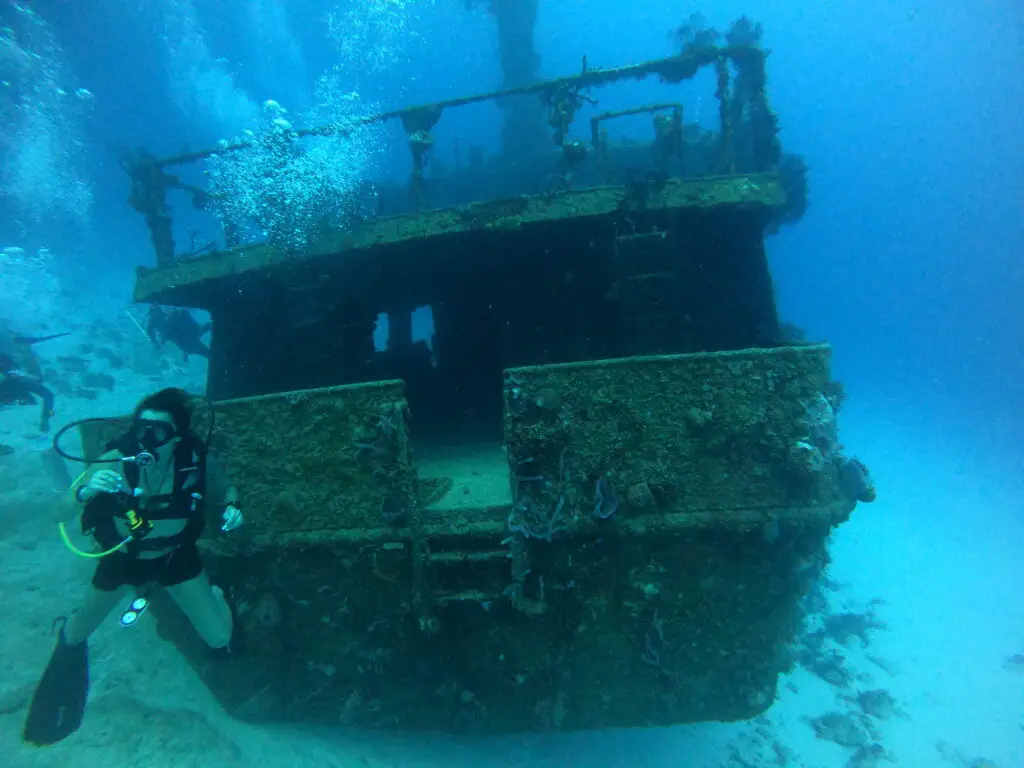 Before the sharksAdvanced Open WaterThree days to 30 metres; in season the shark conservation elective is this dive.
 The next morningFun dives in Playa del CarmenTwo tank reef mornings on the home reefs, 2,200 MXN per diver.
 The other halfCenote diving in Playa del CarmenNine guided cavern routes, from 3,000 MXN for two dives.

