

Pregúntanos dónde vamos a bucear mañana y la respuesta honesta es: depende del mar. Los sitios de buceo de Playa del Carmen se alinean a lo largo de la costa, a minutos de la playa, y parte del encanto aquí es que los sitios se eligen cada mañana según la corriente, la visibilidad y quién va en el bote. Pero después de miles de inmersiones en esta costa, claro que tenemos favoritos. Estos son los sitios a los que llevaríamos a un amigo: qué vive ahí, qué tan profundos son y para quién son.
1. Mama Viña: el pecio
Nivel: Advanced Open Water (o experiencia en profundidad) · Profundidad típica: ~25 a 30 m · Ideal para: Ambiente de pecio, barracudas, energía de peces grandes
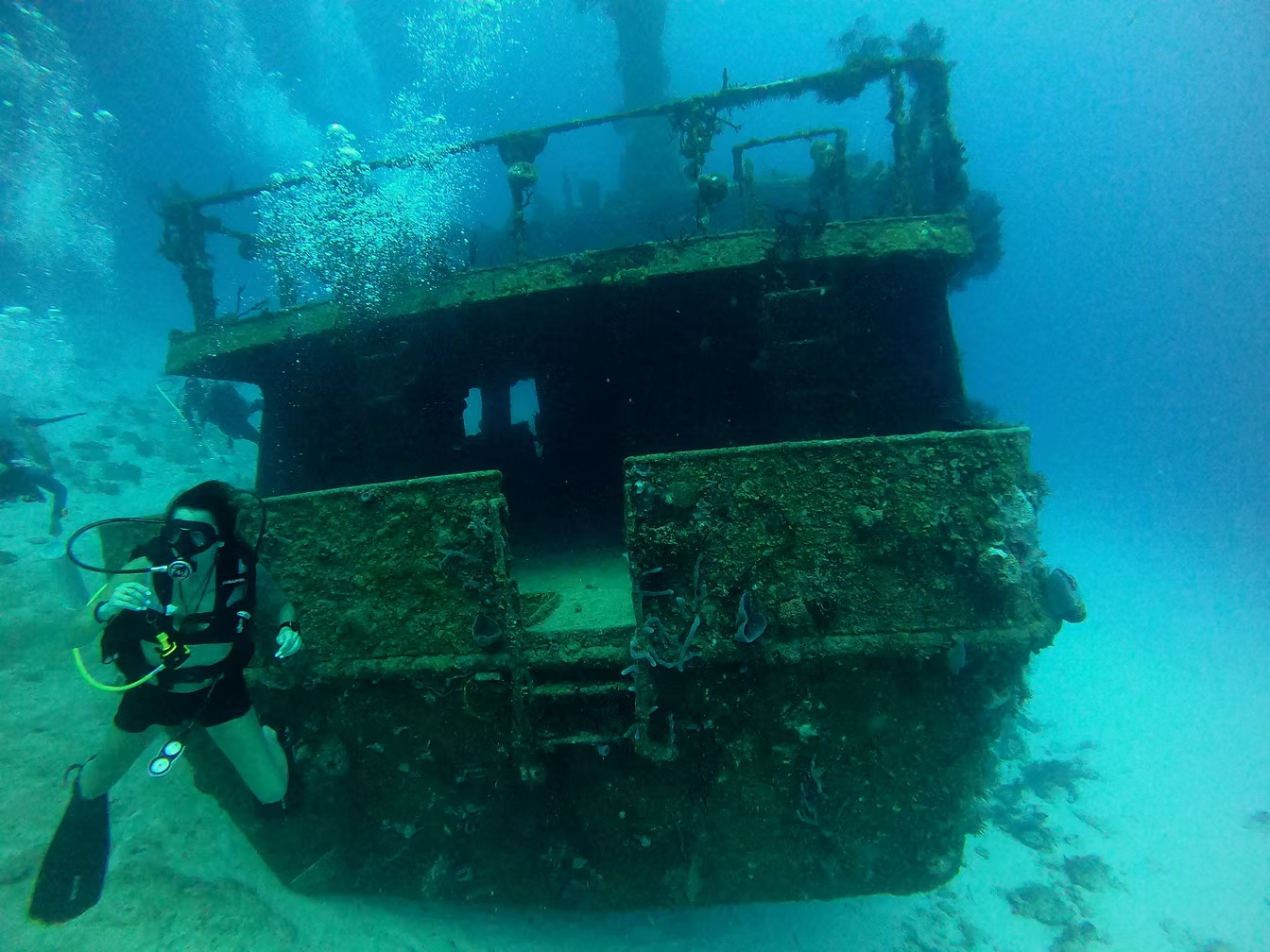
Un antiguo barco camaronero hundido como arrecife artificial en la década de 1990, el Mama Viña es la inmersión emblemática de Playa del Carmen. El casco descansa sobre arena a unos 27 a 30 metros, cubierto de esponjas naranjas y moradas, con barracudas suspendidas en la corriente sobre el mástil y rayas recorriendo la arena debajo. Las corrientes pueden ser vivas, y eso es justo lo que mantiene tan vivo al pecio: es la inmersión de la que nuestros huéspedes hablan en la cena.
2. Tortugas: la autopista de las tortugas
Nivel: Open Water en adelante (ayuda tener experiencia en deriva) · Profundidad típica: ~14 a 25 m · Ideal para: Tortugas, tortugas, tortugas
El nombre tiene su razón. Tortugas caguama y tortugas verdes se alimentan y descansan a lo largo de este tramo de arrecife, y en un buen día pierdes la cuenta. Tortugas normalmente se bucea como una deriva relajada: la corriente te lleva por la línea del arrecife mientras las mantarrayas águila pasan por el azul en los meses más frescos.
3. Barracuda Reef
Nivel: Open Water · Profundidad típica: ~12 a 16 m · Ideal para: Perfiles fáciles con acción constante
Una franja clásica de arrecife a media profundidad con canales de arena, cabezas de coral y sus barracudas suspendidas en el agua. Las profundidades amables y la vida marina confiable lo hacen una segunda inmersión favorita después del pecio o una primera inmersión de regreso tras una pausa.
4. Jardines: los jardines
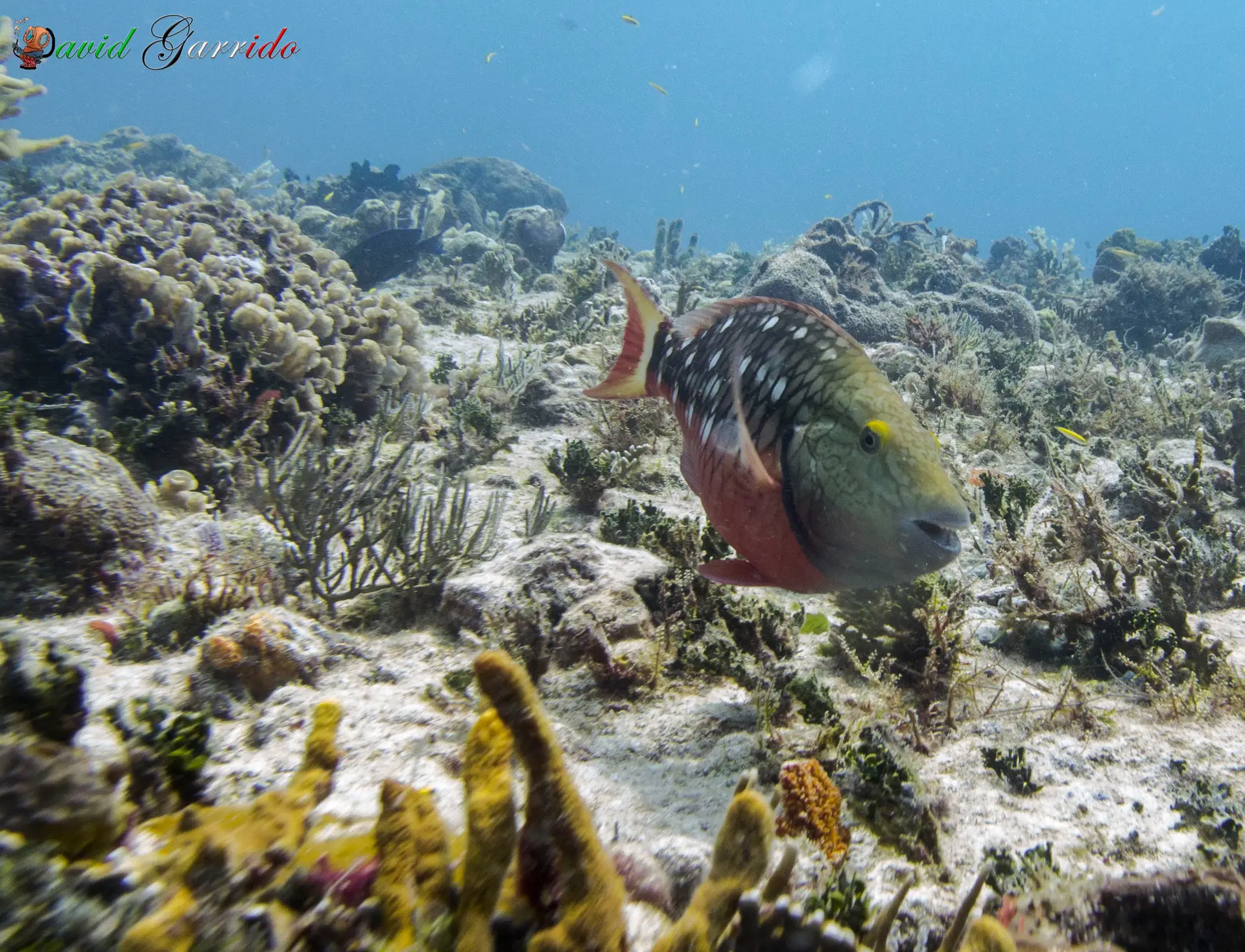
Nivel: Todos los niveles, ideal para buzos nuevos · Profundidad típica: ~10 a 14 m · Ideal para: Primeras inmersiones en el mar, tiempos de fondo largos y relajados
Jardines de coral someros con condiciones suaves y tiempo de fondo generoso: aquí muchos buzos hacen sus inmersiones del curso Open Water y aquí los buzos oxidados se sacuden el polvo. Fácil no significa aburrido: morenas, rayas, pulpos en el turno de noche y nubes de peces de arrecife hacen interesante cada inmersión.
5. Moc Che: dos sitios en uno
Nivel: Open Water (somero) / Advanced (profundo) · Profundidad típica: ~8 a 14 m somero · ~25 a 30 m profundo · Ideal para: Flexibilidad, y de vez en cuando un visitante sorpresa
Moc Che viene en dos versiones: un arrecife somero lleno de vida macro y peces juveniles, y una sección más profunda donde el arrecife baja en escalones hacia los 30 metros. En invierno, el lado profundo a veces recibe la visita de los residentes más famosos de la temporada: consulta nuestra guía del tiburón toro.
6. La Cueva del Pargo: la cueva de los pargos
Nivel: Open Water · Profundidad típica: ~8 a 15 m · Ideal para: Salientes, pasajes y cornisas llenas de peces
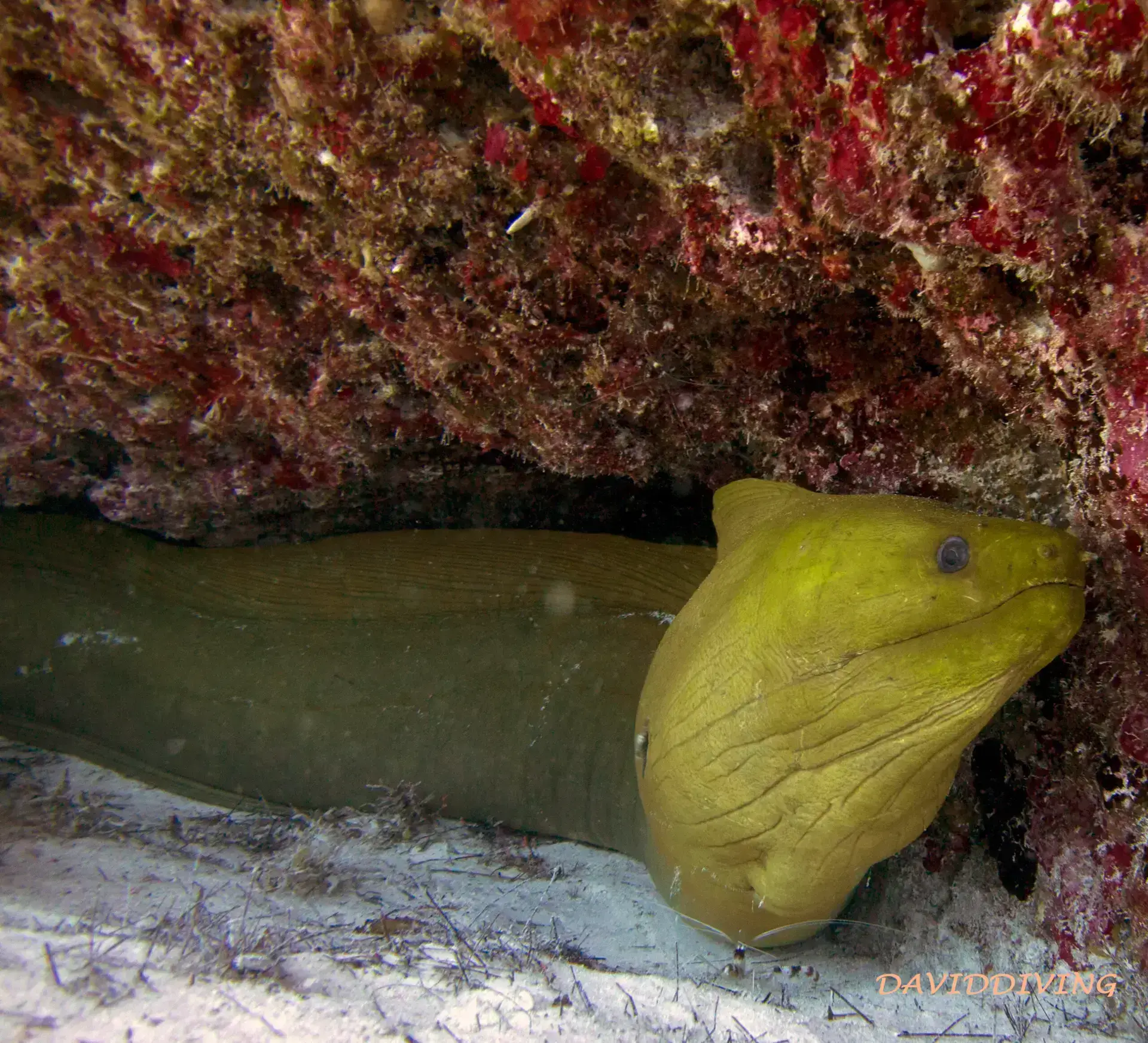
Un laberinto somero de cornisas y salientes donde los cardúmenes de pargos se acumulan a la sombra y las morenas se asoman desde las grietas. El juego de luz entre los cortes del arrecife lo hace un sitio para fotógrafos, y un adelanto del ambiente con techo sin el compromiso de una caverna de cenote.
7. Pared Verde: la pared verde
Nivel: Advanced Open Water · Profundidad típica: ~25 a 30 m o más · Ideal para: Buceo profundo de pared y pelágicos en los meses más frescos
La “Pared Verde” cae hacia aguas profundas al sur de la ciudad: una verdadera inmersión de pared con gorgonias, esponjas y la sensación de inmensidad azul por la que normalmente cruzas el canal. En los meses más frescos patrullan aquí las mantarrayas águila. Por la profundidad, este es para buzos con certificación Advanced.
8. Shark Point: el evento principal del invierno
Nivel: Buzos certificados, Advanced recomendado · Profundidad típica: ~24 m · Ideal para: Tiburones toro, de noviembre a febrero
Una arena plana a unos 24 metros que pasa la mayor parte del año como una deriva tranquila, y se transforma cada invierno cuando llegan las hembras preñadas de tiburón toro. Bucearla en temporada, con buenos briefings y grupos pequeños, es una de las grandes experiencias del Caribe.
Cómo elegimos tus sitios
Las condiciones y las certificaciones deciden el día: el viento y la dirección de la corriente, quién va en el bote y qué está pasando dónde. Las mañanas de dos tanques (2,200 MXN, agua incluida) suelen combinar una primera inmersión más profunda con una segunda somera y relajada. Dinos qué quieres ver, tortugas, el pecio, criaturas macro, y armamos la mañana en torno a eso. Y si el mar trae uno de esos raros días malos, los cenotes nunca se cancelan.
Preguntas frecuentes
¿Qué sitio de buceo de Playa del Carmen es mejor para principiantes?
Jardines y el lado somero de Moc Che: profundidades fáciles, condiciones tranquilas y mucha vida. Los buzos recién certificados encajan perfecto en nuestras salidas diarias de dos tanques.
¿Necesito certificación Advanced para el pecio Mama Viña?
Advanced Open Water (o experiencia equivalente en profundidad) es la preparación correcta: el pecio está a más de 25 metros y puede tener corriente. El curso AOW te lleva ahí en tres días.
¿El buceo es a la deriva?
Muchas veces sí: las derivas suaves a moderadas a lo largo del arrecife son el estilo local. Tu guía se encarga de la navegación; tú disfrutas el paseo.
¿Cuál es la mejor época para bucear estos sitios?
Todo el año, y en invierno se suman los tiburones toro en Shark Point. Nuestra guía mes a mes tiene el panorama completo, y la guía completa de buceo en Playa del Carmen cubre todo lo demás.
Lo que dicen los buzos
Lee reseñas recientes de huéspedes de Xibalba Divers MX.
Bucea los mejores sitios de Playa del Carmen
Mañanas de dos tanques, grupos pequeños, sitios elegidos según las condiciones y tu nivel. Cuéntanos tus fechas y tu lista de deseos, tortugas, el pecio, tiburones, y lo hacemos realidad.