


Los antiguos mayas creían que los cenotes eran entradas a Xibalba, el inframundo. Desciende a uno con un tanque en la espalda y entenderás por qué: rayos de sol que atraviesan agua dulce cristalina, formaciones de piedra caliza más antiguas que la historia humana y un silencio que se siente. Para la mayoría de los buzos, su primera inmersión en cenote no se parece a nada que hayan vivido bajo el agua.
También es totalmente posible para un buzo certificado común, sin formación en cuevas, siempre que sepas qué esperar. Así funciona exactamente tu primera inmersión en cenote, desde la recogida en el hotel hasta ese primer rayo de luz.
Las nueve rutas que guiamos, con profundidades, niveles de certificación y precios, las encuentras en nuestra página sobre buceo en cenotes en Playa del Carmen con todos los detalles. ¿Todavía dudas entre arrecifes, tiburones y cenotes? Empieza con buceo en Playa del Carmen.
Primero, lo que realmente vas a hacer: buceo en caverna
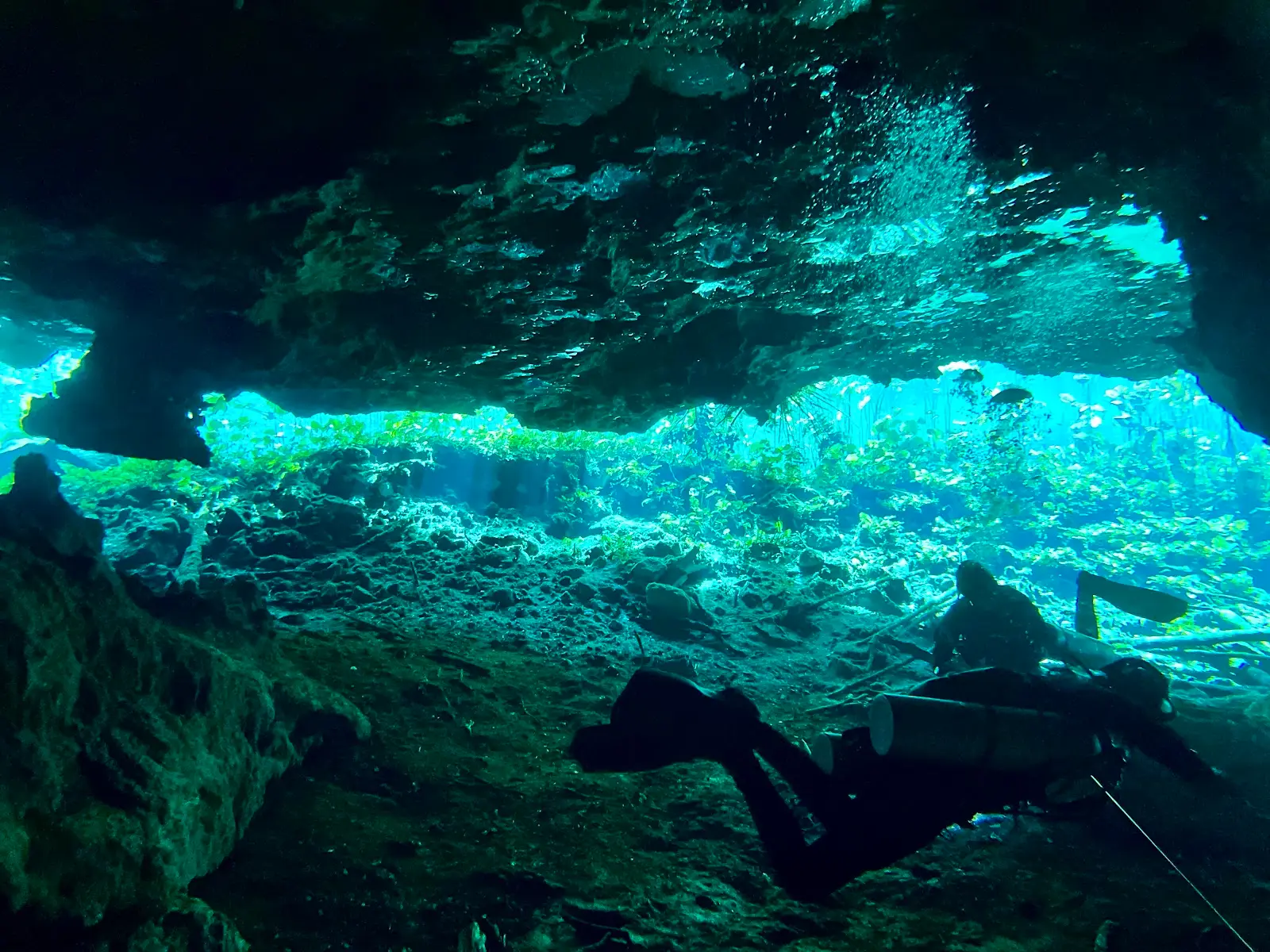
Las inmersiones guiadas en cenotes son inmersiones en caverna, no en cueva. Esa distinción es la base de su historial de seguridad:
- Te mantienes dentro de la zona de luz y la luz natural del día se ve durante toda la inmersión.
- Sigues una línea guía permanente a lo largo de una ruta bien establecida.
- La profundidad máxima en la mayoría de las rutas clásicas es modesta (muchas veces 10 a 14 metros).
- Buceas con un guía de cenotes especialmente capacitado en un grupo de no más de cuatro buzos y ese es el estándar en Xibalba Divers MX.
El buceo en cueva completo, más allá de la luz del día, es una disciplina aparte que requiere una formación extensa. Si más adelante te pica esa ambición (¡pasa!), lee nuestra guía sobre cómo convertirte en buzo de cuevas en México.
¿Cumples los requisitos?
Para los cenotes clásicos de primera vez necesitas:
- Una certificación Open Water (o superior). ¿Aún no tienes certificación? Empieza con nuestro curso Open Water en Playa del Carmen.
- Un control de flotabilidad razonable. Esta es la habilidad que importa en una caverna: no chocar con formaciones de 10,000 años, no levantar el sedimento del fondo. Si estás oxidado, una inmersión de calentamiento en el arrecife el día anterior es una buena idea; te diremos con honestidad si creemos que la necesitas.
- Algunos cenotes más profundos (El Pit, Angelita) requieren Advanced Open Water y es una gran razón para tomar el curso AOW aquí.
Cómo transcurre el día
Una mañana típica de cenote con nosotros: te recogemos en tu hotel (Playacar y el centro de Playa del Carmen) y manejamos 20 a 45 minutos hacia la selva. En el cenote, tu guía te da un briefing completo: la ruta, las señales de mano, el uso de la lámpara y las reglas de oro (quédate detrás del guía, quédate en la línea, no toques nada). Te equipas, revisas tu flotabilidad en aguas abiertas y empiezas.
La mayoría de los viajes incluyen dos inmersiones, ya sea dos rutas en un cenote o dos cenotes distintos, con un intervalo de superficie para agua y snacks entre ellas. Las inmersiones en caverna con Xibalba Divers MX cuestan 3,000 a 3,800 MXN según el cenote, con transporte, tanques, lastre y la entrada incluidos; el equipo de renta cuesta 500 MXN por día. Normalmente estás de vuelta en Playa a primera hora de la tarde.
Cómo se siente allá abajo
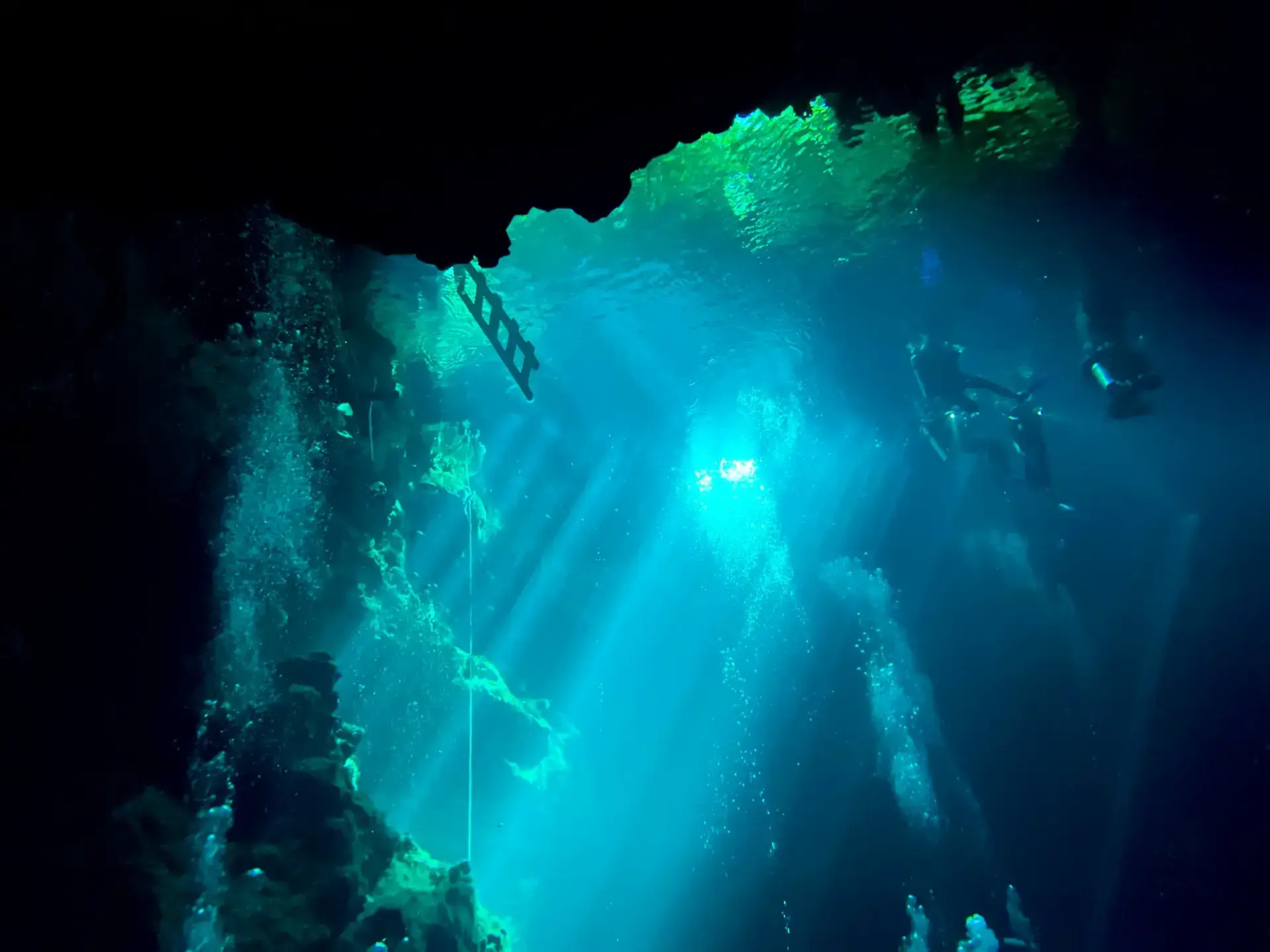
- La visibilidad. El agua subterránea fresca y filtrada es tan clara (30 m o más) que los buzos lo describen como volar. Verás toda la caverna en cuanto entres.
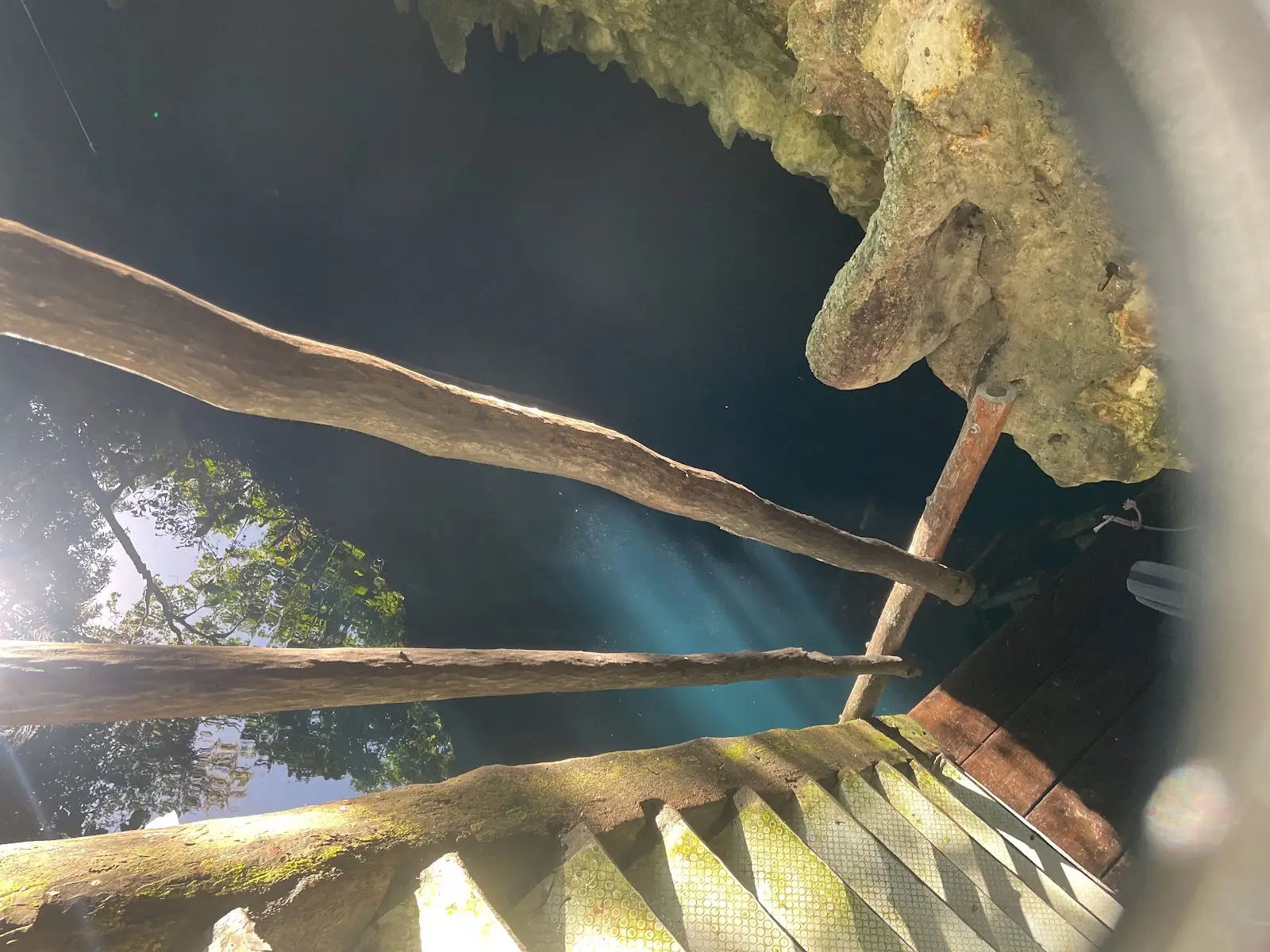
- La luz. En días soleados, los rayos atraviesan el agua como luces de escenario: catedral es la palabra que todos usan. La media mañana es el mejor momento.
- La haloclina. En algunos cenotes, una capa donde el agua dulce se asienta sobre el agua salada crea un efecto óptico brillante y borroso: atraviésala y mira cómo el mundo se derrite y vuelve a enfocarse. Extraño primero, adictivo después.
- Las formaciones. Estalactitas, estalagmitas y columnas formadas durante milenios cuando las cuevas estaban secas. Dejaron de crecer cuando las cuevas se inundaron, y por eso nunca las tocamos.
- La temperatura. Constante de 24 a 25°C todo el año. Un traje de 5 mm te mantiene cómodo (nosotros lo damos).
- La calma. Un entorno distinto al mar, con condiciones evaluadas para cada ruta. Muchos buzos dicen que es el buceo más tranquilo de su vida.

“Pero estoy nervioso”: la sección honesta
Es perfectamente normal. Tres preocupaciones aparecen todo el tiempo:
Claustrofobia: las cavernas para principiantes son mucho más amplias de lo que la gente imagina: muchos pasajes son del tamaño de un salón de baile y la luz del día se mantiene a la vista. Los guías eligen rutas según tu nivel de comodidad y puedes terminar la inmersión en cualquier momento. La mayoría de los buzos nerviosos salen pidiendo repetir.
Oscuridad: llevas una lámpara de buceo, tu guía lleva lámparas de respaldo y el brillo de la salida es una referencia constante. La oscuridad es parte del ambiente, no es absoluta.
Perderse: para eso están la línea guía continua y el máximo de cuatro buzos. Nunca te separas de la línea, y tu guía ha buceado estas rutas cientos de veces.
Dinos al reservar que es tu primer cenote: te asignamos el sitio adecuado y hacemos el briefing con calma.
¿Cuál debería ser tu primer cenote?
Las opciones clásicas para la primera vez incluyen Chac Mool y Kukulkan (luz dramática, perfil fácil), Ponderosa (El Edén) (abierto y luminoso con una gran haloclina), Dos Ojos (el famoso: dos dolinas conectadas con pasajes esculpidos) y Casa Cenote (canal de manglar abierto, sin techo alguno). Nuestra guía de los cenotes más bonitos cerca de Playa del Carmen describe cada uno, y la guía completa de buceo en cenotes cubre la región a fondo.
¿Comparas tours de cenotes antes de reservar? Nuestra lista para elegir un tour de buceo en cenotes en Playa del Carmen explica qué preguntar, qué incluye un precio justo y qué señales de alerta evitar.
Etiqueta en el cenote
- Nada de bloqueador ni repelente de insectos antes de la inmersión: incluso los productos biodegradables dañan el ecosistema de agua dulce. Enjuágate primero si te pusiste algo.
- Perfecciona tu trim antes de acercarte a las formaciones; una sola patada de aleta puede destruir una estalactita de milenios.
- Respeta los sitios: son lugares sagrados para los mayas y zonas arqueológicas activas.
Preguntas frecuentes
¿El buceo en cenotes es seguro para principiantes?
El buceo guiado en caverna tiene un historial de seguridad excelente. Las reglas que lo mantienen seguro, zona de luz, línea guía, máximo cuatro buzos por guía y guías de cenote capacitados, son exactamente lo que recibes en una salida profesional.
¿Necesito Advanced Open Water?
No para las cavernas clásicas: Open Water es suficiente. Los cenotes profundos como El Pit (más de 30 m) requieren certificación Advanced.
¿Puedo llevar cámara?
Normalmente sí, para buzos con experiencia y buena flotabilidad; algunos cenotes cobran una pequeña cuota por cámara. En tu primera vez vale la pena dejar la cámara y simplemente vivirlo; tu guía puede recomendarte los mejores cenotes para fotos en la segunda ronda.
¿Qué tan fría está el agua, de verdad?
24 a 25°C: más fresca que el mar aquí en verano, más cálida en invierno. Con el traje de 5 mm que damos, la mayoría de los buzos está perfectamente cómoda para dos inmersiones.
Lo que dicen los buzos
Lee reseñas recientes de huéspedes de Xibalba Divers MX.
Anímate a entrar
Tu primera inmersión en cenote sube para siempre la vara de lo que puede ser el buceo. Cuéntanos tus fechas y tu nivel de certificación y te recomendamos el primer cenote perfecto: grupos pequeños, máx. 4 buzos por guía, recogida en hotel incluida.